







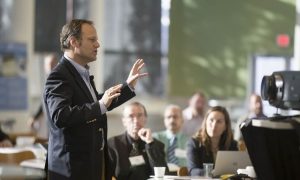

In a reversal of a Lower Church court ruling, Rev. Jane Adams Spahr has been found guilty of violating The Presbyterian Church (USA)'s constitutional ban on same-sex marriage by performing weddings for two lesbian couples.
O-Be-Joyful Fiesta
Margaret Avison, a much-celebrated Canadian poet described as “one of the great religious poets” of the 20th century—and who spent a while sojourning among Presbyterians at Knox, Spadina, Toronto, from the 1960s to the 1990s—passed away at age 89 on July 27 from complications following hip surgery after a fall. She won the prestigious Griffin Poetry Prize four years ago and was twice a winner of the Governor General's Award for poetry in a literary career that spanned 40 years. Her first award-winning book of poetry, Winter Sun, was published in 1960. She became what she called a “committed Christian” in 1963 by “listening” more deeply to the message of the Bible and, after that time, as is so evident in her next book, The Dumbfounding (1966), she often wrote about her deeply held, yet private, personal Christian faith. Many critics compare her work to the great metaphysical poets of the 17th century.
ENI — The Islamic Council of Norway and the (Lutheran) Church of Norway Council on Ecumenical and International Relations jointly declared in August that everyone is free to adopt the religious faith of their choice.
WCC — Three major Christian bodies are supporting a code of conduct to guide activities seeking converts to Christianity. The World Evangelical Alliance recently joined the World Council of Churches and the Vatican in supporting the code at an August consultation in France. The code is expected to be finalized by 2010.
Afghanistan's dusty hope
I can't keep up with Sayed Ahmad. His compact wiry body is constantly on the move, driven to do something good in his beloved land. He has lived his 50-something years here in the province of Bamiyan, Afghanistan. He watched the Soviets enter in the early 80's, then the Mujahadin and then the Taliban. He watched two massive 1,500-year-old Buddhas bombed into oblivion by the Taliban; he watched friends, neighbours, relatives arrested and murdered; he has watched his own community, his people, slowly disintegrate through 30 years of war and then drought.
Taste it!
O taste, and see that the Lord is good!
ENI — Malawi's largest Protestant church's outgoing general secretary has declared himself “very satisfied” with his attempts to stem membership losses.
Companions on the road

photos by Katie and Michael Munnik

“We are pilgrims on a journey and companions on the road.” - Richard Gillard, Brother, Sister, Let Me Serve You
Not all loaves of bread fit easily into a backpack. I discovered this when my husband Michael and I walked across Spain together, following the 1,000-year-old pilgrimage to the city of Santiago. When you're walking 25 kilometers a day you need to carry lunch with you. Most days, Michael strapped the bread to the outside of his backpack. Since my legs are shorter and I walk more slowly, it was my job to keep an eye on the loaf, ensuring that it remained firmly attached and more-or-less waterproofed.
Historically, pilgrims made this trek to visit the sacred relics of the Apostle James, for whom the town is named. Anyone who visited the site would be granted a compostela — an indulgence to speed their passage through purgatory and on to heaven. Today, pilgrims still receive the compostela on completing their walk, but few set out with that as their primary goal. The pilgrims we met along the way spoke instead of seeking time to reflect, to mull over life's large decisions or to think about endings and new beginnings. Some talked about seeking God or listening for His will; others spoke more vaguely, unsure of what they believed but looking for deeper meaning or new direction for their lives.


Several times a day, we would stop for a rest, perhaps in a small village bistro for a cup of café con leche or by the side of the path for a picnic lunch. Other pilgrims would drop their packs next to ours and we would chat about the walk behind us and compare directions for the route ahead. We shared stories, stamps, even money and especially food. At dinnertime, we gathered at communal tables, eating delicious meals that cost pocket change, with a bottle of wine to share and as much crusty bread as we could eat. These were meals to linger over, enjoying the feeling of being at rest and being together.
Along the pilgrimage, I often thought about the story of the road to Emmaus. Two disciples, distraught after the crucifixion of Jesus, were travelling away from Jerusalem. Perhaps they were trying to put distance between the recent confusing past and whatever future might be ahead for them. On the road, they met a man who asked them about their journey. At first, they hesitated, not wishing to include him in their discussion. Their own reflections clouded their eyes so that they didn't see who spoke with them. But when they stopped for the evening meal and the man broke bread with them, they recognized him as Christ. And, in this recognition, life began anew for the disciples. They turned back to Jerusalem, where the new church was just beginning.

At the end of our Spanish pilgrimage, we, like generations before us, attended a pilgrim mass in the cathedral of Santiago de Compostela. There were so many people packed in for the service that there was only space to stand. Light poured in through the high ancient windows as we stood together—tired, relieved, footsore and joyful. We weren't able to eat the bread and drink the wine as part of the Catholic mass, but we felt deeply connected to those around us. They were quite literally our companions on the road. The word companion derives from the Latin for “one who breaks bread with another” from the roots com meaning together and panis meaning bread.

As we stood in the crowded church, I looked around at the faces of so many fellow pilgrims we'd met along the way. In the month it had taken us to walk to Santiago, many people had become our companions. Together we'd shared meals and advice about blisters. We'd sat quietly in old churches and laughed on the road and sung late into the night. We'd talked about our lives easily, as if we'd known each other for years. And as the priests read out the names of the countries of all the pilgrims who had arrived since the last mass, it seemed as if the whole world was represented. In the crowded cathedral at the end of the long walk, I saw the promise of the community to come, the Kingdom feast with abundant bread for all.
Bamiyan
Bamiyan Buddhas
Clay Aiken in Bamiyan
Bamiyan C.R.C.
Bamiyan Drought
Kabul
Kabul Housing
Confessions of a People Pleaser
This morning I awoke to the sound of a jackhammer. I thought at first I was snoozing inside a construction zone but after a few shakes of my head I realized it was our old friend Flicker. Flicker is a rather large common flicker (Colaptes auratus) who drops by from time to time to rattle our cage, literally. This morning he was doing a particularly good job of it. I threw my legs over the side of the bed and stalked out of the bedroom to peer through the kitchen window and watch him. He was standing on the board on which our bird feeder is mounted and bashing his beak against the board for all he was worth (flickers are in the woodpecker family). The board is attached to our metal deck railing and so he was setting up a vibration through it and the deck and the whole wall of the house. The wall of the house acted like a huge amplifier. The racket was so loud that the windows were rattling. But it wasn't the noise that got to me.
The Presbyterian Church in Canada and Project Ploughshares have chosen Adam Parsons for an eight-month internship at the Ploughshares offices in Waterloo, Ont. The internship is the first in a three-year partnership between the two bodies.
Oro Votes to Leave Denomination

One of the largest Presbyterian congregations in the country voted in August to leave the denomination. Trinity Community Church in Oro, Ont., dreams of morphing into a multisite church with numerous satellite locations in order to draw more people inside its soon-to-be multiple walls. However, currently, there is no accommodation within the Book of Forms for a single congregation to be part of more than one presbytery.
“Our goal is to reach more people and change their minds about God,” said Rev. Carey Nieuwhof, Trinity's senior minister. “And to see lives transformed.”
To best do that, said Nieuwhof, Trinity will have to strike out on its own.
On the last Sunday before Labour Day, members and adherents discussed, debated, and voted on whether or not they wanted to remain a part of the PCC. Of the 382 people present, 97 per cent voted to leave their Presbyterian roots behind. (Of that number 103 were members, the rest adherents or teens.) Voting remained open for another week or so, as many of the approximately 1,400 regular Trinity-goers were yet to cast a ballot. The final results were not in at press time.
“I am surprised and humbled at the percentage of votes in favour of this,” said Nieuwhof. “It affirms and confirms our direction.”
Thanks to a partnership with North Point Ministries in Alpharetta, Georgia, a relationship Nieuwhof has nurtured for the last three years, Trinity's direction includes planting satellite locations to not only attract new members, but to enable people who already attend Trinity (many of whom drive 90 minutes to two hours to Oro) to go to church closer to home—and hopefully bring their friends with them. Trinity would be North Point's “strategic partner” and the home base for the ministry's new Canadian extension.
Nothing is yet finalized, and the next step is for Trinity leaders to meet with a special presbytery committee appointed to discuss the matter, tally the votes, discuss how assets will be handled, and present a recommendation to the Presbytery of Barrie, which was to meet Sept. 11. There they will discern if the congregation should be dissolved entirely, or if there are enough loyal Presbyterians who want to continue.
If Trinity does secede it will have to negotiate whether it can purchase its building from the denomination. The plan is for the new non-denominational church to open on Dec. 2. Nieuwhof said they hope to open three campuses in the next year, possibly in Barrie, Orillia and Bracebridge. A Toronto campus is also planned.
Both Nieuwhof and Rev. Stephen Kendall, principal clerk, were quick to point out that the denomination has been helpful all along, encouraging Trinity's leaders to pursue new forms of ministry within the Presbyterian Church. But Trinity's leadership decided the process would most likely take too long—possibly years—something the congregation simply doesn't want. “We need to get on with the mission God has given us,” said Nieuwhof.
Despite any differences, Nieuwhof stressed the desire for a positive outcome. “Our concern is for the peace and unity of the church. We want to move through this with a mutual blessing. The goal is not to burn bridges, but to treat each other with love and respect.”
Trinity leaders began to discuss their plans about two years ago. By spring of this year, the elders decided that in order to fulfill their vision, “It was best to leave the denomination,” as noted on Trinity's website. To do so, the leadership “made a decision to resign no later than November 15, 2007, and to begin a new church. Our hope is that all or most Trinity people would join us in this new church to fulfill and continue the vision we have discerned together.”
Presbytery clerk Rev. Dr. Jim Sitler said the situation highlights a few issues for the denomination: that the PCC has no process for a congregation to leave; current polity does not envision multisite ministries; and, that the matter could benefit from study and input from the wider church.
“Our church must wake up, forget more of the same, or we will continue to face questions of rapid decline and irrelevance to our culture,” said Jim Fraser, a Trinity member who supports the changes in Trinity's structure but wishes they could occur within the denomination. “The Presbyterian Church has a death wish when our church structures cannot affirm vibrant churches that are growing, but different.”
A Cup of Water
A few weeks ago I spotted a small story in the newspaper about an imam in Lebanon issuing a fatwa banning so-called honour killings—the murder of a close female relative by a male for an alleged sexual crime.
An Outsider on the Inside
Gospel for October 14, 2007 (Proper 23): Luke 17:11-19
The Presbyterian Church was one of eight denominations to sign a covenant with Canada's First Nations at a ceremony in Winnipeg on National Aboriginal Day, June 21st. The renewed covenant acknowledges and celebrates the positive examples of cooperation between churches and First Nations since the covenant was signed for the first time in 1987.
Ten members of Dallas's Highland Park Presbyterian Church were ambushed and robbed by four armed bandits while on a mission trip to Kenya in August. Three of the 10 members were kicked and punched by men armed with rifles and a machete. The group was travelling through remote jungle northeast of Nairobi on the way to install an irrigation system when they were accosted.
Thanksgiving Through Suffering
Rev. Dr. John Gladstone, one of Canada's late princes of preachers, offers wise insight in a sermon-based on Luke 17:15, 18:11 and 22:17 – entitled Graduating In Gratitude which states there are three levels of thanksgiving. The first, most rudimentary, is basic, obvious thanksgiving for the grace of gifts and mercies experienced; the second, more problematic, is the kind of thanks which compares our fortunate condition to the less fortunate condition of others and the last, most mature thanks, is thanksgiving in the face of the world's or one's personal agonies and suffering.
Congregations that think they have great websites are invited to submit their web addresses to a U.S.-based ministry that focuses on helping churches design their own eyecatching, comprehensive and effective websites.
Peace, Love & Understanding
For I was hungry and you gave me something to eat, I was thirsty and you gave me something to drink, I was a stranger and you invited me in, I needed clothes and you clothed me, I was sick and you looked after me, I was in prison and you came to visit me. – Matthew 25: 35, 36
A Call to Prayer
I was speaking with a commissioner at General Assembly who lamented that so much of the business seemed routine. He felt that what we needed to do was to set aside all the routine business and spend the time dealing with pressing issues like the serious and ongoing decline of the church—which wasn't even mentioned. I remember number of years ago attending The Presbyterian Church in Canada's national thinktank and one of the amazing conclusions was that there should be regular days of prayer and discernment across the whole church. For the sake of convenience and manageability, it was suggested that they be held on a regional basis. I think someone even suggested that they might take the place of synod meetings. It is hard not to agree with such suggestions. If ever we decided to do such a thing, it would take a discipline and even a depth of devotion that most are not used to. (When was the last time you and your congregation were involved in a three or