





Lent and Purim

Sunday Baking

posted on March 28, 2011 in Columns, Miscellaneous, The Messy Table

Share : 

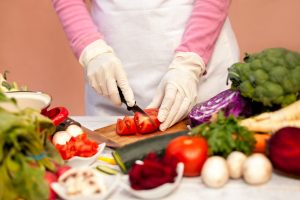
My table has been messy with baking this afternoon. They say that Lenten Sundays are feast days, and so I obliged. Though it’s not just Lent that got me feasting. It’s really Purim.

» More

Hope

Counting blessings amid the tears.

posted on March 28, 2011 in Columns, Patricia Schneider

Share : 

Well, finally some good news. Harry is responding to the chemo positively so they will continue.

» More

Living in Trust

Even when it makes you cry.

posted on March 21, 2011 in Columns, Patricia Schneider

Share : 

We feel that although radiation has some benefits, the trips down to Edmonton and back are just costing us too much health-wise. Perhaps medication is the best alternative.

» More

Japan in the Museum

In the face of devastation

posted on March 21, 2011 in Columns, Miscellaneous, The Messy Table

Share : 

It is proving to be a difficult Lent. The news is so full of upheaval and suffering. Devastation. Desolation. World events before which we fall silent.

We want to respond, despite our distance, but we don’t know what to do. We don’t even know how to grasp all this suffering. Our imaginations seem poor. But we want to respond.

» More

Trumpets, Organ Benches and Church Doors

Where is church music heading?

posted on March 15, 2011 in In Song

Share : 

One thing is sure: one size no longer fits all. This variety in our worship and our music will require more from church musicians and more, not less, support, imagination and deep theology from our congregations.

» More

Paper Stained Glass

posted on March 14, 2011 in Columns, Miscellaneous, The Messy Table

Share : 

Part of my job description is to throw parties. No joke. I am to provide social activities for our congregation. So, as I mentioned in last week’s post, I threw a party last Saturday in the church hall.

» More

A Turn for the Worse

Struggles with condo boards and cancer.

posted on March 14, 2011 in Columns, Patricia Schneider

Share : 

Well … so much has happened … all these problems here with our new unit have caused us so much grief that Harry says “sell” but I am not sure if we can take another move. I have left it in God’s hands. Some day we will look back and understand the “why’s” of all these recent upsets … I know we are not forsaken but oh, I feel so fragile!

» More

More Lenten creativity

Moving past pancakes...towards Saint Ignatius

posted on March 7, 2011 in Columns, The Messy Table

Share : 

The Spouse was ranting this morning at breakfast. Okay, an exaggeration, that. No one at our breakfast this morning could muster the energy required for a rant. We’ve just had a very full weekend. Friday was Beangirl’s first Photo Day at school, and, in the evening, I had a Kirk Session meeting. Saturday was spent at church, enjoying a rather chaotic and happy afternoon of messy crafts and games with the Sunday School children. Then yesterday…

» More

New Homes and Old Troubles

Still carrying the "cancer load."

posted on March 7, 2011 in Columns, Patricia Schneider

Share : 

We were down to Edmonton last week. Saw a new doctor who believes Harry’s cancer in his neck is the same as in his chest. He did mention a new experimental drug out in Toronto that might have some effect but it is hard on the heart and Harry has already had one heart attack.

» More

A Winter’s Feast in Grand Rapids

A symposium on worship (and did I mention joy?)

posted on March 3, 2011 in In Song

Share : 

There is an energy, a hungry spirit of enquiry at the Calvin Symposium on Worship, held each January in Grand Rapids. The Symposium shows a passionate commitment to exploring and supporting the arts of worship that we Presbyterians can learn from.

» More

St. Matthew’s, Wallace, N.S.

posted on March 1, 2011 in People & Places

Share : 

Just around Christmas, two new elders were ordained at St. Matthew’s, Wallace, N.S. There was cake. And on our website, the hard working Rev. Grant with the new elders, Nancy Reid and Peter Dewar; and a living nativity, with animals, at Pugwash. “O’n sgeul ait, cha bhi fad.” Amen.

The Fall’s, N.S.

posted on March 1, 2011 in People & Places

Share : 

One day short of eight years later, a cairn was erected at The Fall’s, N.S. where St. Andrew’s was once part of a four-point charge of the Tatamagouche Pastoral Charge.

The congregation closed in December 2002.

The wording on the Cairn is self-explanatory.

Pictou Presbytery

posted on March 1, 2011 in People & Places

Share : 

The Presby Singers are a very popular and much in-demand group comprised of members of the Pictou Presbytery.

St. Andrew’s, North River, N.S.

posted on March 1, 2011 in People & Places

Share : 

Rev. Mary Anne Grant (second from left) with Frank and Anne Matheson, Aberdeen, Cape Breton, and Roy Kerr, Goose Cove and elder at St. Andrew’s, North River.

The Mathesons are members of Little Narrows, Cape Breton, where the late Rev. Dr. A.D. MacKinnon was for over 40 years. He was also a fluent Gaelic minister.

Grant and MacKinnon

posted on March 1, 2011 in People & Places

Share : 

Rev. Mary Anne Grant and Presbyterian College student, Lydia MacKinnon, met in Montreal in early October, during the Board of Governor’s Meeting.

They are both childhood friends and daughters of two Cape Breton Gaelic ministers, who were an important part of the history of the Presbyterian Church in Cape Breton.

Guildwood Gives $25,000

posted on March 1, 2011 in News

Share : 

“We’re thrilled,” said Rev. Hugh Donnelly of Guildwood Community in Toronto. “At first we knew it was an ambitious project.”

As the church prepared to celebrate its 50th anniversary throughout 2010, its leaders decided they would set a lofty mission goal: by the end of the year, they aimed to raise $25,000 to build three wells in Malawi under the auspices of Presbyterian World Service and Development.

“We were prepared to go into the 2011 calendar year and make it a year and a half project,” Donnelly said. But there was no need. By mid-November the congregation had met its goal, and funds continued to come in.

Creative fundraising initiatives included gathering small change, “turning wine into water” by donating refunds from the return of wine and beer bottles, and Sunday school children offering the contents of their piggy banks by dumping them into a wooden well. And it included more unique methods, such as one member who ran Zumba workout classes and donated a portion of the proceeds. An endowment left to the church for mission was used to match donations dollar for dollar. And each donor had a chance to win a quilt made by a member of the church.

“The congregation always comes through for mission,” Donnelly said. “It’s a passion and people just rally.” – C.Purvis

Erindale, Mississauga, Ont.

posted on March 1, 2011 in People & Places

Share : 

Erindale celebrated its 50th anniversary last year. To finalize their celebration, they completed their long-term project of restoring the spire on their designated historic building. With the help of former members, local community and businesses and the Mississauga Historic Society, the spire, which was destroyed by lightning about 90 years ago, was erected last November. Seen here are Jim Kellhammer, chairman of the spire committee, addressing the congregation at the dedication service, with Rev. Ian MacPherson.

Simply Christian in a Secular Age

Develop a firm and certain knowledge of God's benevolence.

posted on March 1, 2011 in Theology 101

Share : 

Photo by Christiane Zwerg/Digital Vision

In a well-known Monty Python sketch, an English gentleman is sold a dead parrot and tries to return it to the pet shop from which it was purchased 30 minutes earlier. When presented with the evidence – a stiff corpse nailed to a wooden perch – the store clerk famously replies: “It’s not dead, it’s just resting!”

If mainline Protestantism in Canada is not dead, it’s certainly on life support, and not just resting. Most Canadians, young and old, don’t attend church even though they believe in God. The reasons are varied and complex and it may be that some find the church’s theology hopelessly conservative and outdated. But it’s also possible that they stay away because they don’t see the point. What’s on offer in many mainline Protestant churches today is a form of liberal or progressive Christianity that’s difficult to distinguish from the values of a secular age.

Why should anyone worship a God who is impotent and irrelevant in daily life, distant and mysterious and unknowable, a benign and benevolent deity who really can’t do much to help? Why should you entrust your life to Jesus if he’s only a spiritual teacher who offers inspiring insights but not salvation? If human beings are basically good and just need a little encouragement and education, there are, quite frankly, much better places to find that help than your local church. Why be part of a faith community that offers little meaning for life and little hope in death? The nominal form of culture-Christianity that one finds in many mainline Protestant churches is friendly enough but it offers little power for transformation.

Walter Bryden saw this clearly 80 years ago. He wrote equally against rational orthodoxy (fundamentalism) and rational idealism (liberalism) which bedevilled the church of his day. Both, he argued, reduced the gospel to western forms of Enlightenment reason. As a result, the church is confronted with the choice between affirming divine doctrine or experiencing divine mystery. Fundamentalism pushes the church in the direction of sectarianism; liberalism allows it to drift towards secularism.

The first looks for certainty in doc-trinal propositions; the other dismisses doctrine in favour of universal human ideals. In their place, Bryden proposed what Yale theologian Hans Frei would later name “a generous orthodoxy,”

neither fundamentalist nor liberal (for his recent book, Brian McLaren borrowed the title from Frei). Bishop Tom Wright calls it Simply Christian.

A generous orthodoxy resists both obscurantism and relativism. It teaches that God is known not because we search God out but because God has revealed Godself in Jesus Christ, the incarnate Word, fully human and fully divine. The Christian church confesses that human life will be transformed not because we can make things better but because God has acted decisively in the life, ministry, death, resurrection and ascension of Jesus. Our response to what God has done is faith.

Holistic faith is the way of the head, heart and hands. It involves doctrine, devotion, and discipleship. The creeds (credo – “I believe”) were said, sung, signed (sometimes with blood, sweat and tears), and studied. Calvin defined faith as “a firm and certain knowledge of God’s benevolence towards us, founded upon the truth of the freely given promise in Christ, both revealed to our minds and sealed upon our hearts through the Holy Spirit.” (Institutes 3.2.7)

We would do well to learn about this kind of faith from our sisters and brothers in the majority world, especially those who have come to live among us from the global south. They offer a robust and joyful form of Christianity that appeals to people of all classes (not just the bourgeois middle class) and their churches are growing. They tell us that a good dose of gospel teaching stiffens the ecclesial spine. They experience their faith and they expect costly discipleship. They look at us and they know that accommodating the Christian faith to its cultured despisers is a western strategy that has failed.

The American writer John Updike said, “Faith is a force of will whereby a Christian defines himself against the temptations of an age. Each age presents its own competing philosophies … Skepticism and mockery surrounded the first apostles … Christ risen was no more embraced by Paul and his listeners than by modern skeptics. The stumbling blocks have never dissolved. The scandal has never lessened.”

By trying to lessen the scandal for the past 100 years, Canadian Protestants have sown the wind; we may now be reaping the whirlwind (Hosea 8:7). Scripture reminds us that God’s Spirit will not always strive with us (Genesis 6:3). If we insist on revising the faith according to our own interests we will be in danger of cutting ourselves off from the catholic tradition and the church universal. Confessing Jesus as Lord and Christ in a secular age is not fundamentalism; it is simply Christian.

Encountering God is the Goal

Church membership is not about creating rules to keep people out.

posted on March 1, 2011 in For the Record

Share : 

My German classics professor, trying to explain to us how a verb in Greek could have two apparently opposite meanings, put it ever so succinctly: “‘Ja,’ it means go and it means come. It’s the same thing!”

It wasn’t obvious at the time, but I gradually learned that opposites often have a common linguistic root.

I raise this as an introduction to the word “member,” the root of the word membership, which is a common thread throughout this issue.

Member comes from the Sanskrit for flesh. Its root meaning is more strongly conveyed by the word membrane. At a glance, they appear to be opposites: Membrane is a whole covering; member is just part of a whole, an individual.

Common root. Whole and part. But member has an inherent sense of the whole that the individual is part of.

Which brings us to the question of church membership explored in this month’s cover story on page 31 by Will Ingram and Matthew Ruttan. It’s a question that has come before General Assemblies. But assemblies are legislative sessions and free-ranging discussions are difficult in that setting.

We hope that raising the matter in the Record might provoke an interesting and informed discussion about what membership in the church might look like in the future.

Part of the discussion is bound to involve questions about what, if anything, a person has to subscribe to become a member of the church. To traditionalists this may seem an odd remark: membership necessarily involves agreeing to the fundamentals of the organization.

In the postmodern world, however, what even constitutes fundamentals is up for questioning. Two of the church’s academic thinkers, Joe McLelland and John Vissers, take this up in the latest installment of our Theology 101 series.

Postmodern philosopher McLelland takes a slightly different approach than theologian Vissers, but it is not about agreeing with John as opposed to Joe, or vice versa.

In fact, I would encourage those who find themselves inclined more to one author than the other after reading both to take a day or two and then re-read the author they are less inclined to.

Because it’s only by wrestling with the difficult points made by someone who sees the world a little differently, that any of us is challenged and grows.

So what does it mean to be a member of the Presbyterian Church in Canada? Even more fundamentally, what does it mean to be a Christian?

This may seem obvious to those who have lived within the church community most or all of their lives, but it is a deep and perplexing question for many others today.

Whether we like it or even believe it, we live in a postmodern age in Canada. In simple terms, postmodernism is a way of describing current attitudes that question institutions and their underlying certainties.

This fundamental questioning about whether truth has any objectivity or universality is one of the reasons people no longer go to church.

But it is emphatically not – as too often suggested – a turning away from God. Far from it. Most Canadians still believe in God. The questions are what do they believe about God, whom do they trust to talk about God with, and where can they encounter God? Increasingly, the answer for the latter two questions has been: “not in church.”

Instead of creating more or different membership rules, perhaps we should focus on creating conditions where people can encounter God – creating those “thin spaces” that St. Columba identified on Iona, (see p. 23).

Because while God is not completely obscure – He has shown us His face and more in the person of Jesus – at least in our earthly life, bounded by time and space, much about the divine life and purpose does remain hidden, a mystery.

It is only in the next life that we are promised that we shall see God “face to face.”

So perhaps that is what it really means to be a member of the church; it is to recognize that although we are individuals, we are all united by the divine membrane of love.

Churches Closing in Sudan

posted on March 1, 2011 in News

Share : 

Some churches, parishes, religious and church schools in northern Sudan are closing due to a large movement of people to the south after the independence referendum, according to some church leaders.

In the referendum, held in mid-January, voters in southern Sudan overwhelmingly approved independence for their region, the site of two long civil wars. The area is expected to become independent in July.

Roman Catholic Bishop Daniel Adwok, the Auxiliary Bishop of the Khartoum Archdiocese, said the closures were occurring after people who had settled in a northern area during the conflict travelled voluntarily and en masse to the south, with more movement expected.

Although many of the Christians are said to have returned to the south voluntarily, some observers said they had departed because they could not be assured of their safety. Church leaders are concerned that if the Muslim government in the north adopts strict Sharia law, as it has promised, the church will suffer. – –ENI