







The 137TH General Assembly
posted on July 15, 2011 in General Assembly, Opinion
To borrow a phrase:
I did not insert the word ‘not’ above, and I don’t know who did!
Actually, much of the week was well spent, in spite of the hot, humid weather, the endless chicken meals and the occasional commissioner who felt that he or she must express an opinion on every “little” item on the docket.
There was that magnificent sermon on opening night by the outgoing moderator, Herb Gale. His compelling challenge to “jump into the cool, refreshing river of God’s abundant grace and splash around” was an invitation hard to resist. Then there was the excellent leadership of Rick Horst, the new moderator, as he guided the assembly through some rocky rapids with efficiency and good humour.
This year there seemed to be less of that rancorous right/left theological division than in other years. It was still there but it was expressed with respect for the other’s opinion and with a welcome generosity of spirit—for the most part. During discussion on the wording of a statement about our church’s relationship with the Jewish people, which called us “to reach out in friendship and hospitality” to Jewish neighbours, a commissioner moved to insert the words “and with prayerful witness.” This gave rise to spirited debate on what constituted “prayerful witness.” Some of us saw these as code words for “converting the Jews” which seemed to be out of place in a public statement that would be shared with Jewish sisters and brothers. The amendment was narrowly defeated in the assembly’s only standing vote.
Assembly made one decision that could have far – reaching implications for our theology of the ministry of word and sacraments. This is the ministry to which ministers have always been ordained in our church. But this assembly decided to permit presbyteries, in special circumstances, to commission a properly trained ruling elder or a member of the Order of Diaconal Ministries to administer the Sacrament of Holy Communion. This, of course, is a change to the law of the church so it must be sent to presbyteries for their vote. I welcome this change because it provides a means for folk in remote areas to receive the nourishment of the sacrament on a regular basis; but stay tuned for some confusion over what the ordination of ministers is all about.
The assembly’s response to the cry from Palestinian Christians, known as the Kairos Palestine Document, was keenly debated. This debate reflected the difference of opinion on the Israeli/Palestinian conflict that exists in Canadian society and around the world. But in the end the assembly wisely, I thought, decided to respond as one body of Christians writing to another, not fully agreeing with them but expressing Christian solidarity.
If there was one issue at this assembly that defined the struggle that we find ourselves in as a denomination, it was the lack of a comprehensive vision for the church, which prevents us from setting clear priorities and leaves us stuck with a national structure that claims to give priority to the needs of congregations but is built on an anachronistic Christendom model that is no longer suitable in a post – Christendom era. This was evident in three overtures that called for restructuring of the national organization. Each of them referred to the decline in membership and the loss of congregations, and the need for the national structure to focus money and staff on the renewal and resourcing of congregations. This was a cry for help, but it gave the impression that if we just get the structure right our churches will be rescued. Of course that is not true, but it does indicate that the church out there expects a level of help from the national structure that it is not getting now.
The dilemma for the national organization is how to respond to this cry at the very time when contributions to Presbyterians Sharing are declining. The Life and Mission Agency tried to meet this impossible challenge by a merging of departments into a peculiarly named office called Canadian Ministries/The Vine.
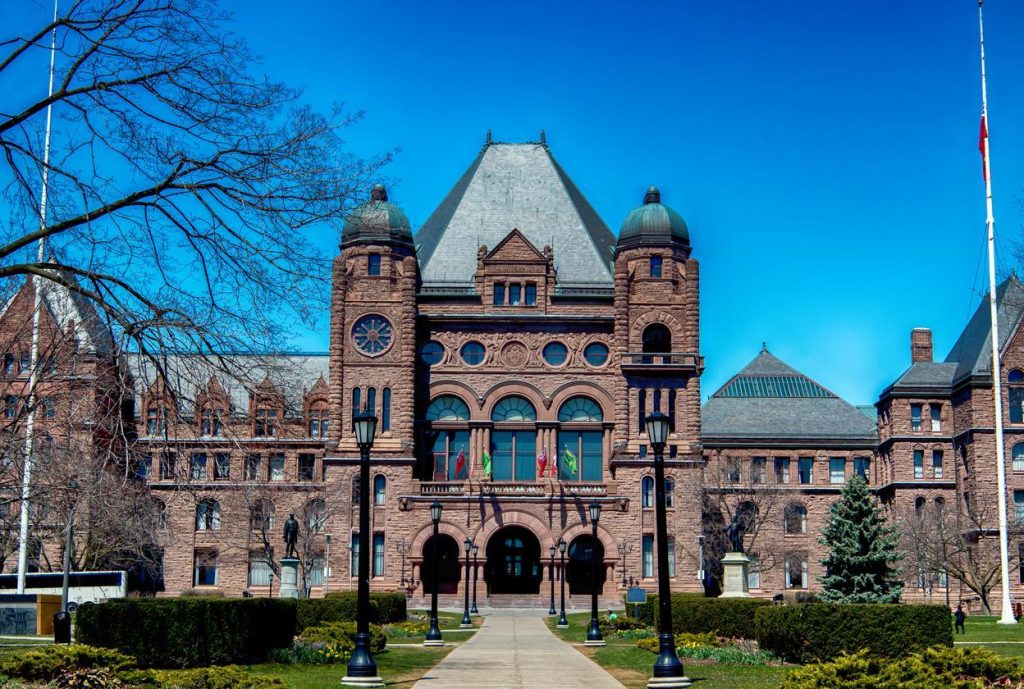
Commissioners attempted to address those overtures by asking for a special committee to take on the task of visioning and restructuring. In the end the assembly decided to leave this task to the body that is supposed to be doing it—the Assembly Council. My conviction is that we must now do what we should have done 20 years ago; that is, imagine that we have no national structure in place, start from scratch and design a structure that will meet the realities of today and stop trying to fit a round peg into a square hole by rearranging things at Wynford Drive.
Such are my random impressions here on the last day of assembly. We probably could have done in two days what we took five days to do, but hey, we would have missed all those chicken meals.
We are a gifted and struggling church, but the river of God’s grace flows in abundance, so hope is the main item on the docket. And honestly, I don’t know who inserted the “not” above.
[Presbyterian] Faith Without [Presbyterian] Works is Dead.
posted on May 1, 2010 in Opinion

photo by Robert Harris/iStockphoto
I love being part of the Presbyterian Church; I love the biblical basis and Christological focus of our confessional life represented in Living Faith. But if Living Faith connects us theologically, Presbyterians Sharing, the church’s national fund, ought to connect us practically. I’m not sure, however, that it does.
It seems to me that many congregations feel disconnected from Presbyterians Sharing, and, feeling disconnected, don’t support the national and international ministries conducted under the Presbyterians Sharing umbrella to the extent that they could. Every year, we struggle to meet the budget; in 2009 the amount given by congregations was more than $100,000 less than expected. Now I know that many congregations gave generously and that some congregations gave sacrificially, but there are still too many congregations who remain indifferent to Presbyterians Sharing and whose support is half-hearted. While we talk loudly about being Presbyterian, we don’t always follow that through in practical ways.
I don’t think I ever quite “got” Presbyterians Sharing until I needed its support. In 2000, I was appointed director of pastoral studies at Presbyterian College, Montreal. For six years I was involved in the ministry of pastoral formation, helping to shape students who now serve as ministers across the denomination. But my teaching ministry was possible only because of the grant given annually to the college by Presbyterians Sharing. My point is that Presbyterians Sharing is not an abstract, boring budget cooked up by a bureaucratic, self-serving cabal based in Toronto. Presbyterians Sharing is the means which allows theological teachers to prepare future ministers for the church; Presbyterians Sharing is the means that allows dedicated men and women to serve around the world with partner churches, the means used to produce all sorts of helpful materials that nurture the faith of the children, young people, adults, and elders of our congregations. I could go on …
No doubt if I were in charge of the Presbyterians Sharing budget, I could find inefficiencies; I might also question the legitimacy of a program here or there, for not every issue which the denomination addresses is of vital concern to me. But surely that ought not to weaken my commitment or cause me to dilute my congregation’s capacity to support it. My priorities in ministry are never going to be exactly those of anyone else, and thankfully, the vision of the national church is more diverse than mine. I also need to make sure that my demand for the perfect doesn’t get in the way of the good.
Presbyterians Sharing is an opportunity. It provides a practical means of doing what none of us can do alone. So let’s all get behind it. And as we give to Presbyterians Sharing on a weekly basis, let’s pray on a weekly basis for some particular ministry carried out under its umbrella. Prayer, money, local, global, faith, works — let’s not separate what was intended to be integrated as one.
posted on May 1, 2010 in Opinion

Engraved after the artwork of Alexander Bida (1813-1895)
What do you hope to receive when your minister stands up to preach on Sunday morning? A gospel message taking you deep into the heart of God’s love in Christ? A prophetic declaration encouraging you to apply your faith to the burning issues of the day? A word of consolation or pastoral support? An explanation of a difficult passage of scripture? An early reprieve from a long and possibly boring dissertation?
The great theologian Karl Barth once suggested that the preacher should enter the pulpit with the Bible in one hand and the morning newspaper in the other. The sermon, in other words, needs to deliver the biblically-attested message of the gospel while at the same time relating that message to the mood and challenge of the hour.
David H. C. Read, formerly the minister of Madison Avenue Presbyterian Church in New York City, liked to say that the sermon can begin in Manhattan and move to Jerusalem or begin in Jerusalem and move to New York. The real disaster is when the sermon begins nowhere in particular, wanders all over the lot, and ends up in the familiar territory of “So what?”
It’s easy for us to complain, however. The fact of the matter is that preaching is exceedingly difficult and ministers need all the help they can get. The biggest help we can offer as parishioners is by simply letting them be themselves.
Please: no comparisons with the beloved Rev. Dr. So-and-So. Or the fireball around the corner. Or the preacher who uses the lectionary. Or the one who doesn’t use the lectionary.
Method is arbitrary. What counts is proclaiming the gospel with understanding and power. And every minister needs the freedom to do that in his or her own way.
Think of the differences amongst the gospel writers themselves. The no-nonsense, straight-to-the-point Mark; the tradition-loving Matthew; the bleeding-heart liberal, Luke; the philosophical egghead, John. The New Testament is willing to live with such differences. Why can’t we?
But even allowing for a supportive congregation, what can we do when the minister’s theology is out to lunch and the sermon a predictable dud?
For starters, we can focus more on the prayers and hymns and scripture readings. A bad sermon can also stimulate us to do our own thinking on the subject, perhaps even do our own research afterwards.
When the great American novelist John Updike died last year, much was written about his life and work — and not least about his lifelong practice of churchgoing. Imagine preaching to a super-perceptive writer like John Updike!
There must have been preachers who disappointed him. Indeed, Updike’s fiction gives us portraits of a number of ministers who disappoint. Yet Updike himself never dropped the practice of churchgoing. He claimed he needed his Sunday fix, needed the company of fellow believers. And don’t we all?
We are made for God, yes, but we are also made for one another. And part of our life in Christian community brings us into regular contact with the sermon, this strange but vital window onto God, this curious but compelling message of judgment and grace.
The preacher is like John the Baptist, saying “Don’t look at me. But do look at the one to whom I am pointing in all my weakness and confusion. ‘Behold the Lamb of God who taketh away the sin of the world! He must increase, but I must decrease.’”
In the end, preaching is not a case of trying to impress people with verbal pyrotechnics, but of sharing the source of salvation. It’s a case of one hungry beggar telling another where bread can be found.
One of Updike’s ministers, Rev. James Purdy, was once asked by his denominational magazine what it was like to preach to the famous writer. Purdy first made it clear that, before God, nobody is famous. We’re all hungry sinners in need of grace. Then he went on to say: “It’s a joy to preach to him as a parishioner. John is a quiet and generous critic; he has a certain sparkle and twinkle in his eye so that you can tell when you’re on. And when you’re off, he masks it well.”
Would that every parishioner were as generous, and every preacher as deserving of that appreciative sparkle and twinkle in the eye.
Lessons learned from a rural ministries conference.
posted on April 1, 2010 in Opinion

Photo by Lachlan Currie / istockphoto
I was driving to Lloydminster, which straddles the border of Alberta and Saskatchewan, to attend a rural ministry conference. The conference’s official title was Rooted in Faith: Celebrating Rural Churches in Community. The conference’s aim was to reclaim and revitalize rural communities. Rolling into conferences you size up things and the people you’ll be rubbing shoulders with. We had the preliminaries the first night, the usual wine and cheese. And then the stories began to flow.
I got talking to an Anglican priest who told me how a little, feisty Anglican congregation was acting as Christ in their community. They moved out from behind the walls of their building and their church relationships to meet a variety of needs in the community. This small church was so busy doing the gospel that they couldn’t afford, and didn’t seem to need, full-time ordained leadership. They had an ordained someone working part-time. Apparently the structures of Anglicanism looked upon this congregation with a somewhat predatory view. Since they couldn’t afford or even want the full-time ordained minister, they were considered less than worthy. They could have been on some list somewhere that had them threatened with closure. My Anglican storyteller made it very clear she’d advocated for them. I’m not sure what “advocated” means but it sounded like a good thing. We closed the conversation hoping that the congregation would be left alone to do its work.
I was chewing on some cheese and digesting a number of conversations when I bumped into a fellow cheese lover. A teacher and pastor, Rev. Dr. Someone-or-other. Like many in rural areas, the Rev. Dr. had two jobs. She did some part-time work in a prairie city but her passion and pleasure came from her work with small rural congregations.
According to the Rev. Dr., the sacred cows of the theology and practice of the institutional church have to change! The prevailing thinking and practice of seminary-trained ministers is failing the needs of rural mission and ministry. “Raise up locals to do ministry and mission. Train them where they are at with fully adequate resources to do whatever God calls them to do. Set them free to do God’s work where they are.” I chuckled as I listened because word for word I heard echoes of the passion and perceptiveness of others working in rural ministry.
For some of the conference we sat at tables in the main meeting room. There we were fed in a number of ways. Across the table sat a fellow Presbyterian working within the United Church. We connected through stories. “Sadie” ministered for our denomination, eventually married a local guy, and has since gone onto other things. She told a story about herself.
In the far off days of appointed summer student mission fields, a particular place got a bad name. The student previous to Sadie had found the place intolerable. The next year Sadie was appointed there, and she went out with an open mind. It turned out that the accommodation came complete with an outhouse that rocked in the wind because its eaves were caught in the boughs of a tree. “The roof of the house leaked and the only running water in the place came when it rained.” It did have electricity, which was a shock to local visitors.
But the heart of the community was what she remembered. A community youth group that the Presbyterians oversaw took the town by storm. It ministered to the participants from all faith backgrounds and none. It took Christ to the town and rural area! The young people raised their own money and taught the Christian life to their elders and the community.
Farmers and others in rural areas share a clear picture of the presbytery. “Those city guys don’t get us farmers and town folk! Yeah, they don’t listen very well either. Never hear what we have to say! The only time they want to come out to the country churches are for either seeding or harvest when we have no time to spare. It is always further to drive from the city to here than here to the city.”
Funny, the city ministers and representative elders said the same sort of things about the country folk.
During the conference, there were a couple of times that the theme really got to me. One of those times was when the speaker talked about “place,” needing to teach the uninitiated newcomer. In my early experience, I found myself foolishly assuming that I knew best. After all, I thought, I am the one to teach, what do the locals have to teach me? Upon reflection I am beginning to ask, am I too arrogant to be taught?
And more than all this, as a pastor am I open to God and God’s peculiar people loving me? Or am I insulating myself from God and the locals?
“Hmm — isn’t that a caution,” as my prayerful Grandmother McNeil was want to have said!
posted on January 1, 2010 in Opinion

photo by Tina Loriien
“I can find no clear warrant in scripture for the practice of ordination to Word and Sacrament as we now practice it.” So declared Rev. David Webber last October, reviving a debate that has long simmered in the Presbyterian Church. For second thoughts, the Record requested two opinions on Webber’s challenge.
Centre Road
by Ray Hodgson and C. Joyce Hodgson
Priesthood of all Believers
by Peter Bush
Responding to David Webber's challenges to the church.
posted on January 1, 2010 in Opinion
In our presbytery, Lambton-West Middlesex, we have a church named Centre Road. We haven’t done the research to know for sure, but we bet it’s the only church in our denomination with that name. We have enough churches named St. Andrew’s to shake a stick at and we know that somewhere in that church’s history is a Church of Scotland relationship that led to that name. And then there are the churches named Knox. Again, in their history is a Free Church relationship that led to that choice. However, we would argue that our Centre Road church spells out much more clearly than either St. Andrew’s or Knox, our particular church heritage. Let us explain.
When we became members of the Presbyterian Church in Canada in 1973 – yes, it was the year of the previous “new” hymnbook – we were told to expect the church to be a middle way between churches that were theologically liberal or conservative. We would find people of both persuasions but ultimately, people in this denomination chose a centre road with respect to theology. Let us make this clearer. It was a centre road but not a narrow road: it allowed for a variety of persuasions but no extremes. And that has been our experience of this church. Examples? There are so many to choose from! Our most recent subordinate standard, the Living Faith or Foi Vivante and soon to have its own Korean translation is a walk-away bestseller for our denomination. Not only our church but others have appreciated the middle ground of Reformed theology it clearly and poetically circumscribes with Christian charity and clarity.
It is what defines us as a Reformed and reforming Presbyterian church, continuing its witness in urban, rural and remote places within Canada and with our partners around the world. In our churches are couples who have chosen to worship with us as a middle ground between a Lutheran married to a Baptist or a Roman Catholic married to a United Church member. We have a reformed structure to our worship, done “decently and in order,” that appeals to our ecumenical brothers and sisters from more formal liturgical backgrounds. Isn’t that a good thing, a gift or grace we offer to the ecumenical community! And we have a solid biblical basis for everything we do: the centrality of the scriptures, a strong Reformed approach that appeals to our ecumenical brothers and sisters from more gospel-centred backgrounds. And isn’t that a good thing, too?
We read with interest David Webber’s account in the October 2009 Record of his visit to the Presbyterian Church of Aotearoa New Zealand and followed his directions to its website. There we were able to read the new polity changes that he referred to in the article, the five different routes to ordination which allowed for communion to be offered to all who wanted it, whether they were in an urban, rural, aboriginal or truly remote location. There was provision for the sacramental expression of their faith, whether through their own denomination or the inter-church co-operation occurring in rural areas. The church there was taking seriously its mandate to “feed my sheep” (John 21:17), a reference commonly heard at the ordination of a minister.
What we appreciated even more was that the PCANZ consulted with its ecumenical partners and, as a result, developed a new way of thinking about ordination that didn’t destroy long-held Reformed theological traditions that were part of its heritage. As members of the World Association of Reformed Churches (soon to be called the World Communion of Reformed Churches) and as members also of other partnerships within Canada and around the world, it is important to ensure that whatever changes we make as a denomination are theologically sound. It took years for the church in New Zealand to study, craft and endorse its new path. The Presbyterian Church in Canada has always been known for its slow and deliberate thinking about issues that are central to our faith and witness.
David Webber has shown us that there may be ecumenical partnerships that can help us think through our own difficulties. We will not find all solutions equally helpful. We need ways that won’t become speed bumps or barriers along our broad centre road. We need ways that will continue to offer the gift of apostolic succession – historic continuity with the early church through the teaching and authority given to the apostles and through them to others through the laying on of hands (see Ephesians 2:15-20; Matthew 16:18-19; John 20:19-23; Matthew 28:18-20; Acts 2:42; Acts 8:14-24 and Acts 6:1-6) – through ordination that is central to our Reformed understanding of ordained ministry as outlined in our subordinate standards, a gift that might get lost or obscured if we are not careful. Let us illustrate its centrality to our church.
First, in the Nicene Creed we affirm that “we believe in one holy catholic and apostolic Church,” a phrase that is then picked up and expounded upon in Living Faith at 7.1.5 and following: ”The church is apostolic. It is founded on Christ and the apostles and in continuity with their teachings.” As we continue to read in that section, “The church is present when the word is truly preached, the sacraments rightly administered, and as it orders its life according to the word of God.” Under the next section in the chapter on ministry at 7.2.3 we affirm: ”Ministers of Word and Sacrament are set apart to preach the gospel, celebrate baptism and holy communion and exercise pastoral care in Christ’s name. Their ministry is an order that continues the work of the apostles. Christ preserves this order today by calling to it both men and women. The church recognizes this calling in the act of ordination.”
The Westminster Confession of Faith does not have a section on the ministry; but it does affirm, “there be only two sacraments ordained by Christ our Lord in the gospel, that is to say, baptism and the supper of the Lord: neither of which may be dispensed by any but by a minister of the word, lawfully ordained.”
John Calvin’s Institutes carefully lists and defines the various tasks, duties and purposes of pastors, teachers, apostles, prophets and evangelists in the church. He asserts, “For as our teachers correspond to the ancient prophets, so do our pastors to the apostles.” He later adds: “But what about the pastors? Paul is speaking not only of himself but of them all when he says, ‘This is how men should regard us, as ministers of Christ and stewards of the mysteries of God’ [1 Corinthians 4:1] … From these and similar passages which frequently occur, we may infer that in the office of the pastors also there are these two particular functions: to proclaim the gospel and to administer the sacraments … That is, they have been set over the church not to have a sinecure but, by the doctrine of Christ to instruct the people to true godliness, to administer the sacred mysteries and to keep and exercise upright discipline.”
We know changes are coming but we need to remember Augustine’s aphorism: ”In essentials, unity; in nonessentials, diversity; in all things, charity.” Ordination for the dispensing of the sacraments is an essential. David Webber suggests three changes that need to be addressed by the church. “The first is we have to begin to think and act interdenominationally” and we couldn’t agree more. We need to consider the breadth as well as the depth of the church and seek common agreement where that is possible. We are not the only party involved in the agreement and so we must listen with respect to our brothers and sisters in the faith. We think that means also that we should not embark on a solution to a perhaps temporary and isolated problem by a change that is so fundamental to our Reformed understanding of what it means to be the church.
Secondly, David says, “Rural people need to be practically equipped for ministry in their rural context.” They do. We have tended to reserve ordination as the end of a process, which is thorough in affirming an inner and outer call to ministry, with affirmations by presbytery, an assembly-approved education and finally the actual act of ordination by the laying on of hands by the ministers of Word and Sacrament of the presbytery. We agree with David that “in service education” seems to be the key element that needs to be reconsidered and reconfigured. Other denominations have found it necessary to ordain non-stipendiary or bivocational ministers: those whose income derives from other sources, like a pension, private income or “tent” ministers whose income, like Paul’s, came from other sources than the congregation. Where we differ is that, unlike David, we believe that ordination to Word and Sacrament is essential; the way to get there can be changed.
“The third change that is absolutely necessary for rural ministry has to do with how we approach the ministry of Word and Sacrament,” David says. If we want to continue our present understanding of the church and its ministry, we cannot “go a different route” as he suggests and remain on the same road, let alone a broad centre road, with our ecumenical brothers and sisters. There is much hard work that needs to be done to be a church that continues its witness in urban, rural and remote places within Canada and with our partners around the world. Let’s do that hard work, thoughtfully, deliberately and with full attention to who we are as a church and whose we are as the people of God.
Calvin writes in book four of Institutes, “Whoever, therefore, either is trying to abolish this order of which we speak and this kind of government, or discounts it as not necessary, is striving for the undoing or rather the ruin and destruction of the church. For neither the light and heat of the sun, nor food and drink, are so necessary to nourish and sustain the present life as the apostolic and pastoral office is necessary to preserve the church on earth.”
Responding to David Webber's challenges to the church.
posted on January 1, 2010 in Opinion
Over the last 25 years, Canadian Presbyterians have made a subtle, yet significant change in our understanding of the role the Book of Forms (“the rules”) plays. A moment at the 1999 General Assembly in Waterloo, Ont., stands, for me, as the sign of that change. A motion to add to the Book of Forms: “An elder may resign from the session by placing in writing before the session the reasons for such a resignation” was debated. Of course elders can resign! Everyone knows people have the right to resign from any position; by adding this we legislated common sense. This addition indicates that Presbyterians see the Book of Forms as defining what can be done and how it is to be done; a significant shift from an earlier understanding which saw the Book of Forms as a permission-giving document stating “within these limits, go be church.” We have moved from seeing “the rules” as channel markers indicating the space within which the church and its members were free to function, to being the procedure manual defining what must be done and how to do it. The former approach created space for presbyteries and congregations to take pragmatic steps in addressing ministry needs and opportunities. The present approach demands the rule book be quoted in defense of any new initiative or experiment.
David Webber in his October 2009 article on the rural church contends new pragmatic approaches need to be adopted to do rural and small town ministry. I would argue a new pragmatism is required across the denomination – in rural areas and small towns, in urban centres and suburban neighbourhoods, in theological colleges and the workings of the national church. In the past Canadian Presbyterians, recognizing not all ministry situations were created the same, adopted a variety of models to address the range of contexts in which they sought to have a ministry presence. The examples of pragmatism Webber proposes are not new. We have done much of this before or have within our polity ways to give permission for it to happen.
Developing ecumenical connections is essential in a post-denominational Christianity. Some urban Presbyterian churches have opened their doors to non-Presbyterian congregations made up of Africans or Asians. These relationships benefit both sides economically, the host congregation receiving payment and the tenant congregation freed from needing to maintain a facility of their own. Sadly, the connections often remain purely economic. Would it not be a powerful statement about the multi-ethnic nature of the church to have the black African Pentecostal minister of the tenant congregation participate in leading communion in the Presbyterian host congregation on Worldwide Communion Sunday?
We boast about our commitment to ecumenical relationships. Our most frequent ecumenical dance partners are the United Church, the Anglicans and the Lutherans. That is like going to a dance and dancing only with our cousins: nice and safe, no toes get stepped on, but it is pretty boring. The adrenaline rush comes from dancing with people very different than ourselves: Pentecostals, Baptists, Alliance, those with no denominational affiliation, many of whom are at the cutting edge of urban and suburban ministry. Dancing with them will teach us new dance steps, and help move us towards more effective ministries.
Canadian Presbyterians in the past danced with a variety of ecumenical partners. In the 1890s Canadian Presbyterians came within a hair’s breadth of being a founding denomination, along with the Baptists, of Toronto Bible Training School, which became Ontario Bible College, and is now Tyndale College and Seminary.
Present-day theological education is a product of the Enlightenment, an intellectual movement beginning in 18th-century Europe. The rise of postmodernism, a world view gaining momentum among youth and 20-somethings today, challenges Enlightenment thought. (To test this: listen for teenagers using “random” and “ironic” as statements that something is fun and interesting.) A second influence helping form present-day theological education was the push to re-make theological colleges into professional schools offering professional degrees. However this is a very recent shift in the life of the church, for not until the late 19th century did clergy think of themselves as professionals. A number of contemporary writers within the church are urging reflection on what is lost when clergy are professionalized.
The models of theological education refined over the last 250 years are being challenged. Full credit is due to those theological colleges which have entered a process of self-examination looking towards the re-forming of the educational process. The training of future clergy has profound implications for the congregations these yet-to-be-trained clergy will serve. The time is right to allow experimental models of theological education to surface and be tried. Some of these experiments will take place outside the walls and the direction of the theological colleges.
The Presbyterian Church in Canada has done this before. In the early 20th century, as thousands of non-English speaking immigrants poured onto the prairies, Presbyterians sought out spiritually gifted people with a heart for God and ordained them for ministry without their having been to theological college. Ministry needs on the field trumped the established rules.
We are not in a position to know if the church is living through another Reformation or not; that is for future historians to determine. What is clear is that some of the present upheaval in the church (the emerging church, for example) is completing what the Reformation of 500 years ago began. The time has come to fully celebrate the priesthood of all believers.
It is unconscionable that we allow congregations to go years without someone in their midst able to administer the sacraments. In the sacraments God says, “Here I am acting.” The sacraments were not given to ministers, but to the church. A truth recognized each time the session, as leaders of the church, “approves” a baptism or celebration of the Lord’s supper. Ruling elders, who are ordained, join with teaching elders, to ensure the sacraments are treated with reverence.
Which makes more sense pastorally: to have a minister who does not know the congregation drive 300 kilometers for the baptism of a child she has never met before and will most likely never see again, or to have a long-standing elder, who taught the child’s parents in Sunday school and who is the family’s elder do the baptism?
Which speaks more powerfully about a God who came to be one with us: to have a minister who is properly accredited but who speaks no Tagalog (the first language of most Filipinos) administer communion in English in a Tagalog-speaking congregation; or to have an elder who is recognized for her spiritual insight lead communion in the language of the congregation?
Ensuring that all Presbyterian congregations have regular access to all the means of grace will require thought and planning, but surely any answer will include a rediscovery of the Reformation banner proclaiming “the priesthood of all believers.”
Throughout our history Canadian Presbyterians have responded to the changes in the ministry landscape with pragmatism and experimentation. Today as we face a new set of ministry opportunities and challenges, the time has come to again be pragmatic and innovative in finding ways to effectively carry out the mission Jesus Christ gave to the church.
We are not intended to accumulate treasures on earth.
posted on December 1, 2009 in Opinion

Austin Bear, SK
God does not provide much money to many Presbyterian congregations because they spend it in a way He does not want. To grow more in grace, they should devote their funds to helping needy people rather than on erecting or maintaining expensive buildings.
The concept of a special building for Christian worship was alien to Christ’s early followers. All the “churches” greeted in the name of the Apostle Paul (Romans 16:5; 1 Corinthians 16:19; Colossians 4:15 and Philemon 2) were gatherings of flesh-and-blood believers, not material edifices designated solely for public worship. None of the 109 instances of “church” in the Revised Standard Version of the Bible refers to a physical structure.
The New Testament excludes the thought that a Christian temple is a structure of wood, bricks, stones, or concrete. First Corinthians 3:16 and 6:19 state that it is a believer’s body that is the temple of the Holy Spirit. Ephesians 2:19-22 speaks of the Christian temple as being founded on Christ, the apostles and the prophets, with no mention of a stone foundation or wooden superstructure. All three passages apply the word “temple” to flesh-and-blood Christians rather than to a material edifice. In 1 Peter 2:4-6, the “stones” of which the church is built are Christ and believers – people, not bricks.

Hope Mclean, Burns, Mosa, ON
In the first half of the third century, many Christians still regarded the concept of distinctive religious buildings as the mark of idolatry, as witness these quotations from Origen, a seminary professor and the most important father of the early Greek church. He wrote that one of the distinctive traits of Christians was that we do not honour the Deity by means of temples, because such buildings “are adapted rather to demons, which are somehow fixed in a certain place which they prefer to any other, or which take up their dwelling … after … certain rites and incantations.” And elsewhere: “there will be no need to build temples, for nothing ought to be regarded as sacred, or of much value, or holy, which is the work of builders and of mean men.”
The earliest known building given over exclusively to Christian worship was erected after AD 240. It was modest, a renovated private dwelling, not an expensive cathedral. Older Christian writings contain instances of Christians worshipping only in the Jerusalem Temple, barns and private dwellings, none of which were owned or maintained by the church.
The New Testament mentions collections of money, but the purpose was not for houses of worship but for the relief of needy Christians: Acts 11:28, Romans 15:25-27, 1 Corinthians 16:1-3, 2 Corinthians 8-9, and Galatians 2:10. Jesus taught that helping the poverty-stricken is a Christian duty: Matthew 19:21, Mark 10:21, Luke 14:13 and 18:22. Early writers were of the same mind: 1 John 3:17 and Origen condemn people – especially Christians – who have money but close their hearts against brothers and sisters in need, James 2 is particularly concerned for the relief of the less fortunate. The apostolic command to help the needy was repeated (1) by Origen, (2) by Justin, who was martyred for the faith around 165, (3) in a first-century letter from the church at Rome to that at Corinth (1 Clement), and (4) repeatedly in The Shepherd of Hermas, a lengthy instruction in Christian conduct from the early or middle second century. The repetition of the command to assist the needy in so many sources of such early date shows how importantly it was regarded by Christians who knew not only Jesus’ written teaching but also how it was practised and applied under his first successors. Yet these same Christians never commended erection of a physical palace of worship. Hermas in particular counselled Christians to buy souls instead of lands, and not to accumulate lands and buildings.
The Acts of Thomas relates the missionary efforts of the apostle Thomas in India. Compiled around AD 200, these acts narrate that he was an architect and all-round construction contractor. As such, he was retained by a king to build a magnificent palace. The king did not supervise the project but sent Thomas to build it some distance from his majesty’s residence, and sent instalment payments without seeing how they were applied. The apostle did indeed provide him with a sumptuous new home, but not in the sense the king had thought or intended. Thomas spent his majesty’s money by giving it to the poor, the sick, orphans, and widows – without erecting a physical building. According to Thomas, such use of the king’s money would provide his majesty with a beautiful palace in heaven. When the king learned how his money had been spent on disadvantaged people instead of stone, bricks, mortar and superstructure, he became very angry and imprisoned Thomas. Severe punishment loomed for Thomas until the king’s brother had a near-death experience in which he viewed the wonderful place waiting in heaven for those who spend their money on the poor instead of on material buildings. The brother reported his vision to the king, and they both saw the proper use of money.
According to Christ, we are not to accumulate treasures on earth but treasures in heaven (Matthew 6:20), feed the hungry, provide clothes to the needy, and welcome strangers (Matthew 25:34-46). In fact, Matthew 7:21-23 states that we will be blessed only for doing what God has specifically commanded. All other works and activities done in His name – no matter how great or well intentioned – count for nothing in the kingdom of heaven. God has specifically commanded us to assist the poor, but He never told Christians to build even a small chapel, let alone spend money on one instead of them.
Presbyterians and other Christians should spend their own and their church’s money on what God said He wants. Instead of lavishing it on a house of worship, “let us do good to all men, especially to those who are of the household of faith” (Galatians 6:10).
John Calvin's use may be limited in a post-Christendom world.
posted on November 1, 2009 in Opinion

The Record has expended a fair amount of ink on John Calvin over the past year. It was a reasonable project, for Calvin was one of the great figures in the intellectual history of western Christianity. But for all his talents, the man was only human, subject like all of us to the limitations of time and space.
Don MacLeod’s article in the July/August issue points out that when Calvin went to Paris as a young student, he found himself in a cauldron of new ideas. No doubt, but those ideas were being developed in a society which had been technically Christian since the baptism of Clovis, the Frankish king, in 496, 1,027 years earlier. For over a millennium the intellectual life of France had been shaped by the Christian tradition. The exciting ideas floating around the University of Paris in the 1520s made sense, lots of sense, in a city which had been formally Christian for centuries.
The slogans of the Reformation — by faith alone, by grace alone — have to do with salvation from sin. The authority of scripture alone was declared in opposition to the authority of the church. These arguments were relevant in a society where sin was a central problem, and where the authority of the church was a serious concern. What happens in a society where the church does not exist and where sin is no big deal?
I have long believed that what preachers say is less important than what people hear. I have a hunch that what made most sense to people was Calvin’s critique of idolatry. Reformation studies stress what is written down, the intellectual debate, and tend to skip lightly past the issue of popular support. What made the Reformation a popular movement, as distinct from an academic one?
My evidence is skimpy but suggestive. Knox habitually referred to medieval Christianity as idolatry. That may have been no more than a rhetorical flourish, but he may have meant exactly what he said. He saw the church of his youth as idolatrous. The gods and spirits of medieval Europe had been baptized as saints and admitted to a pantheon. Isaiah’s vision of God as one who “sits upon the circle of the earth” and for whom “the inhabitants thereof are as grasshoppers,” had faded away; popular Christianity was essentially polytheistic and therefore idolatrous.
Iconoclasm, the destruction of images, was widespread in the wake of Reformation acceptance. Protestant leaders were anxious to restrain their followers, but were not always successful. On one occasion the Duke of Conde threatened to shoot a Protestant soldier unless he stopped pushing the statues off the roof of a church in the city of Orleans. The soldier replied, “Sir, have patience with me until I have overthrown this idol, and then let me die if that be your pleasure.” This man was no academic; he was probably a country boy. But he was prepared to die for the right to destroy idols. Is it any wonder that where Calvinism triumphed the churches were stripped bare?
Since missionaries normally worked in polytheistic societies, the most useful part of Calvin should have been his critique of idolatry. But as far as I can make out they never used him. They could do just as well with Isaiah chapter 40.
The mark of conversion in China was the renunciation of idolatry, of polytheism. So important was this change in the initial acceptance of Christianity that Jonathan Goforth sometimes felt he should tell his Chinese preachers to “give the idols a rest.” But these were men who had been converted from traditional Chinese religion. They knew what they were talking about.
The initial surge of conversions in southern Nigeria came in the wake of the British conquest. Why then and not some other time? Everybody who has studied the period has a different theory. Mine is that the conquest posed a serious question for Nigerians. Where did the British get the power to overturn a well established and functioning society so easily? The answer they gave themselves was in Christianity; something the missionaries were only too anxious to provide. Ogbu Kalu’s recent study of Pentecostalism in Africa tends to a similar conclusion. Africans are looking for power — spiritual power — in religion, the power to live creatively, victoriously if you like, in a shifting society.
In India the mark of conversion was breaking caste, usually by eating from a common pot. It was a symbolic act, signifying rejection of the order of Indian society. Caste is a peculiar institution, fixing society in a strict hierarchical order based on occupation. Once a carpenter, always a carpenter, at least in this life. Caste was predominantly a feature of subcontinental Asia and the Far East. In all probability Calvin had never heard of it and if he had he didn’t think it worth spending time on.
In other words, once outside of Christendom, Calvin’s relevance is less and less obvious. The critique of idolatry is an exception, but, as already noted, Presbyterian missionaries probably preferred Isaiah to the Institutes. The authority of scripture, a Reformation idea, had sunk so deeply in the missionary consciousness that they didn’t mention its origins. They took the Bible for granted.
Don MacLeod, in his article, calls on us to be ruled by the preaching of the word. Which word? Isaiah 40:22 or John 3:16? That which makes sense in Christendom may be incomprehensible outside it.
Are we still in Christendom? I doubt it.
Roberta Clare, now of the Elders’ Institute, used to be chaplain at McGill University. In those days she referred to undergraduates as “pre-church.” Many of those born after 1965 may have no prior experience of Christianity, and no reason to look for it. Once upon a time church going was normal; now it is an option, and usually not the preferred one.
What then is the word? A clue may be found, strangely enough, in another article in the July/August Record.
Barry Mack submitted a review of Michael Ignatieff’s new book True Patriot Love. Ignatieff is descended on his mother’s side from George Monro Grant, one time principal of Queen’s University and very much Mr. Presbyterian at the end of the 19th century. Much of the review is devoted to contrasting Grant’s view of liberalism with Ignatieff’s. Grant’s liberalism was rooted in his Christian faith. Ignatieff’s is sui generis, born of itself, like Milton’s Satan, “self begot, self raised.” Even worse:
For Ignatieff … the (Canadian) Charter of Rights … is a free standing object of faith, A Holy Writ. In the process Jeffersonian democracy — a form of political organization that has served the West reasonably well for 200 years — becomes a ‘sacred cause.’
G.M. Grant would have called that, rightly, idolatry. Malcolm Muggeridge once remarked that when people stop believing in God, they don’t believe in nothing, they believe in anything at all. Personal liberty and private property have been around so long they are part of our intellectual furniture; they are ideas which shape the way we understand the world. In that sense they function in a religious way and may be described as idols.
I am not sure how far Calvin will take us with his critique of idolatry. His problem was the pervasive use of images, not the subtle influence of ideas. It is easy to make fun of idols, when a carver decides that one part of a log will be firewood and another part a deity. It is much harder to argue that ideas of obvious usefulness have become articles of faith, sacred causes.
Calvin was undoubtedly a great Christian thinker, but like the rest of us, he was a man of his times. As a guru for all times and places he has definite limitations. Outside of Christendom, missionaries hardly used him at all. Our society is not Christian but secular, even though we live with many vestiges of the past.
It's theologically inappropriate and a little weird.
posted on October 1, 2009 in Opinion

istockphoto
During my years within the Presbyterian Church in Canada, I have noticed we have a bad habit when it comes to our use of the possessive pronoun in the first person plural—that’s right, with the word “our.” Whether it’s within the courts of the denomination, informal gatherings of clergy, or meetings within the denominational colleges, that little word rears its head in the most inappropriate way.
Let me be more precise. It’s not just our use of the word “our” that gets me exercised. Rather, it is the phrase “our church” that frustrates me. What is the provenance of this phrase? Why do we use it? Do we not realize how theologically inappropriate it is?
The theological problem can easily be clarified: Our use of the possessive pronoun introduces a line of division within the one, holy, catholic and apostolic church. If the church is one, how can it be appropriate to speak of “our church,” since this language assumes that there is some other church out there (“their church”)? In this respect we do well to remember that there is only one person who is free to use the possessive pronoun with reference to the one church—but he uses it in the first person singular. Jesus says: “It is my church.”
But our use of the possessive pronoun is unsettling for another reason—it gives expression to a hopeless tribalism.
Though my grasp of the denomination’s history isn’t terribly strong, I’m left to wonder whether this phrase isn’t yet another symptom of Presbyterian insecurity in the wake of church union. While we could just as easily speak of “our denomination” or refer more generally to “the Presbyterian Church in Canada,” we often choose to employ the more substantive “our church.” It comes across almost as an instance of communal self-talk by which we try to convince ourselves of our significance.
Consider an encounter recently described to me: A minister who has belonged to the PCC for a lifetime said to a minister who had joined some years ago from another denomination: “When did you join our church?” The questioner’s use of the possessive pronoun points to the tribalism that underlies every use of the phrase.
Communities, by definition, are set apart by their distinctive beliefs, lexicon, and practices. Yet the boundary between a given community and the wider society can range from rigid/closed on one end to flexible/porous on the other. Our easy use of the phrase “our church” suggests a rigid/closed perimeter around the denomination—which implies that tribalism is just the right word to describe our sense of ourselves and our relation to the wider world.
Lest you think I’m using the pages of the Record merely to air my own petty grievances or to split theological hairs, consider the challenges we face as a denomination. The Christendom model that has sustained Presbyterianism through generations is nearing collapse and we face a significant demographic drop-off in the years ahead.
The shine has come off Presbyterianism. Almost everything in our 21st-century context points to our need to develop novel forms of Christian community, alternative patterns of worship, a more imaginative language of faith, and new approaches to the task of witness for Christ. But the lack of a flexible/porous boundary around our community of faith prevents us from reaching out, with any kind of ease, toward a new language of faith and toward new practices.
Otherwise put, our tribalism is slowly suffocating us. As long as we are characterized by a preoccupation with “our church,” then by definition we are closed to the gospel improvisation that the Spirit might perform among us, we are closed to the creative practices that might define us in the years ahead, and we are closed to those persons who would bring us astonishingly fresh ideas about discipleship.
Maybe you are thinking that the last thing we need is someone else slagging the denomination or reminding us of our decline. I have no interest in wasting my breath with such negativity. But perhaps some honesty about our circumstance will provide an impetus toward the risk-taking and imaginative openness which must define the church today, which must become the hallmark of any denomination that would look hopefully to the future that God in Christ gives.
Without such creative openness all we are left with is “our church”—and that’s not enough.
A new and exciting church, glimpsed at CY09, is emerging from the PCC.
posted on September 1, 2009 in Opinion

Hanging out with a group of 20 teenagers at Canada Youth 2009, I learned a thing or two.
For starters, they loved the worship. I had thought the relational stuff would come first by far. I was wrong. At the beginning of our sessions together, each of us wrote down an experience of God we’d had that day. We put these slips of paper in a shoebox named “Amanda” (long story). Then someone would read them out, as a kind of prayer. I had hoped we could start to open our eyes to the sacred in ordinary life—you know, God in the scrambled eggs, the smell of fresh coffee, that kind of thing. And yet, it always seemed to come back to worship. Relationships too. But worship, above all.
On the way back to our residence one evening, Cameron enthused: “I thought it would be boring, but it’s great. I love the music. I actually want to be there for worship. I can’t wait until tomorrow.” Imagine that.
I thought we’d picked up on the vernacular principle 500 years ago during the Reformation when some innovative theologian-hipster in Germany had the bright idea: hey, let’s try worship in a language people understand, the language they speak everyday—i.e. not Latin. And yet, for quite a number of us at CY09, this was the first time we’d danced in worship, first time we’d felt free to clap or even sway, first time we’d been excited about going back for more the next day.
But maybe there’s a good reason for that. What if these good times inspired our youth to just gyrate right on out of our churches altogether? Shouldn’t we try to be realistic about this kind of enthusiasm? Why not continue to measure out the doses? Once every three years is enough, wouldn’t you say? Let’s be careful about raising expectations. We want people to stay in church after all.
How ironic and tragic, then, that leaving church is exactly what does happen next. Let’s follow the crowd into a future beyond Canada Youth. Fast-forward a few years and, all of a sudden, they’re gone. When our young people get to an age where they can choose church for themselves, they tend to disappear. And, unlike in the past, they’re no longer returning to fill the pews when they get older.
Sandra bucks the trend. She’s a delightful 25 year-old doctoral student—and she has commitment to spare. She was a group leader for the week as well. Sandra told me she’s the only person in her church between the age of 18 and 35. Naturally, she runs the youth group herself. But she’s still missing a community—friendships with Christian peers, companionship as she works through issues relevant to her life-situation. I’ve heard this story before.
Over dinner on Thursday, seven of us met to talk about the “post-CY” predicament. Where will these teenagers be in five years? Why are there so few young adults in our churches? Do we care?
We went around the table. In Winnipeg, someone is leading a church consisting mostly of people between 20 and 45. In Toronto, someone has initiated a small group for young adult “graduates” of the presbytery’s youth ministry. Someone else, from Nova Scotia, observed that this missing generation will show up for the retreats she leads but not on Sundays. Most compelling, someone in Barrie, the only one among us with a so-called “secular day job,” has started a series of art shows and coffee house events. He’s more creative than the professionals. Imagine that. And he’s doing it for the art, not the institution. He’s doing it in faith. And so the conversation goes on …
This is the church that’s emerging all around us. We are Holy Spirit chameleons, Presbyterian shape-changers, Reformed and reforming into a thousand faces. We too shall be released from our previous assumptions. We will be made new as we respond to God who gathers up what seems to separate us—language, generation, culture, to name a few—and brings us together in Christ.
We can’t wait another three years for Canada Youth to happen again.
posted on April 1, 2009 in Features, Opinion

When Andrew Faiz (Pop Christianity, May 2008) mentioned “a powerful letter … which spoke of the loneliness and pain a homosexual person felt within the church,” he touched a nerve for me.
I first came alive to the reality of homosexuality in my early 50s. I was then back at university as a mature student preparing to be a marriage and family therapist. One of my courses was on human sexuality and the professor spared us little as he introduced us to the variety and complexity of human behaviour. He brought three lesbians to address the class with their personal stories, in particular how they came to realize their sexual identity. As I listened, I experienced a jolt of identification as I realized: these people can no more help who they are than I can change the colour of my skin.
There are forces of darkness working against our shared destiny.
posted on September 1, 2008 in Opinion
Canada faces a shocking threat to Medicare's existence and Canada's traditional way of life. The battle is being waged by a mindset featuring an evil ideology, highly organized and supported by big money. On the other side are millions of disorganized citizens who, for the most part, are oblivious to the danger facing them in the joust.
In support of Ontario replacing the Lord's Prayer.
posted on June 1, 2008 in Opinion
It's not everyday that I am prepared to say “well done” to a politician. But Ontario Premier Dalton McGuinty wins my support. The premier-cognizant of the diversity and freedoms of Ontario as the most culturally rich area of the world – wants to write a more appropriate public reflection for the legislature.
We must learn about our neighbour’s faith and customs.
posted on March 1, 2008 in Opinion
February is a time when we think about love and part of that is the Lenten emphasis on repentence for not loving enough. As I thought about that I reflected on my experiences with our Muslim neighbours.
It’s scripture and tradition versus harm reduction.
posted on February 1, 2008 in Opinion
Although it seemed a relatively innocuous line item in last year's federal budget, the Conservative government's HPV (human papillomavirus) vaccination program has generated more controversy than might have been expected. The latest instalment in the debate unfolded as various Catholic school boards in Ontario considered whether to allow the vaccine to be administered within their elementary schools. The Ontario Conference of Catholic Bishops weighed in with an open letter, suggesting that introduction of the vaccine is inconsistent with a Roman Catholic understanding of human life and sexuality.
We must learn about our neighbour’s faith and customs.
posted on February 1, 2008 in Opinion
February is a time when we think about love and part of that is the Lenten emphasis on repentence for not loving enough. As I thought about that I reflected on my experiences with our Muslim neighbours.
The point of worshipping God is worshipping God.
posted on January 1, 2008 in Opinion
Kathleen Norris, the American poet and author well known for her meditations on the Christian faith (The Cloister Walk, Amazing Grace), refers to hymns as “the Protestant liturgy” in one of her books.
Now, there are a few things that he needs get off his chest
posted on October 1, 2005 in Opinion
In the April Record Ms. Eileen Shaw of Hamilton said in a letter that we need a more openness to worship and prayer. I agree with her on this point because when we open our hearts and minds in worship, we automatically become closer to Jesus Christ.
Grow your church by adding a new product line
posted on July 1, 2005 in Opinion
The number of Presbyterian churches in London, Ont., has not changed in at least a decade and the collective roll from 1999 to today shows a downwards trend, but the city's population is larger. We're not only losing ground numerically, we're serving a significantly smaller percentage of the population. In the lingo of business, we're dying!