







Crieff Hills Renovations Get Underway

posted on July 1, 2010 in News

Share : 

4

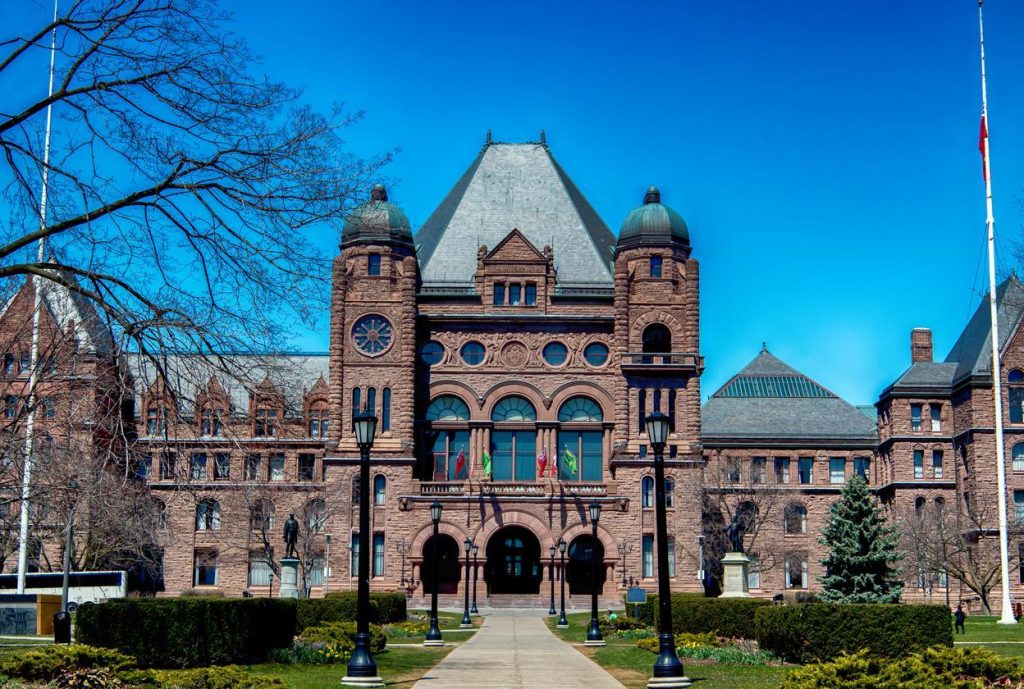
More than $14,000 was raised at an auction on May 15 for the Building a Place Apart Campaign,
which supports the planned renovations of the Crieff Hills Community Retreat and Conference
Centre. Participants bid on quilts, furniture, paintings, gift certificates and other items. The official
groundbreaking also took place during the event, with representatives from the MacLean Estate
Committee, the Capital Campaign team and honourary campaign advisors present.

Presbyterian Takes Top Award

posted on July 1, 2010 in News

Share : 

“I was both surprised and thrilled that a dissertation in the humanities, with the words ‘dance,’ ‘music,’ and ‘Presbyterian’ in its title, was given full recognition as a rigorous scholarly work,” said Clara Henderson of her winning doctoral dissertation, Dance Discourse in the Music and Lives of Presbyterian Mvano Women in Southern Malawi.

It was awarded the University of Indiana’s highest prize for graduate research in April. The Ester L. Kinsley Ph.D. Dissertation Award, which considers work in all academic fields, includes a US$4,000 cash prize and is granted to two dissertations annually: one in the field of science and the other in the humanities.

Henderson spent almost 20 years in Malawi as a missionary of the Presbyterian Church in Canada. There she worked with the music department of the Church of Central Africa Presbyterian’s Blantyre synod, which encompasses southern Malawi.

“During my tenure, I became particularly fascinated with the music and dance of the women’s guild or Mvano,” she told the Record in an email, noting that the guilds include more than 80,000 women in Blantyre synod alone. “I was interested in their use of dance to express their Christian faith, to advocate for change in the political structures of their church, to create a sanctuary for women, and to minister to their local communities.”

Henderson received a doctorate degree in folklore and ethnomusicology this year. She currently works as associate director for projects at the University of Indiana’s Institute for Digital Arts and Humanities.

Anglicans Issue Pastoral Statement on Sexuality

posted on July 1, 2010 in News

Share : 

General Synod 2010 of the Anglican Church of Canada decided almost unanimously to issue a pastoral statement on human sexuality rather than create any new legislation that might have permitted or inhibited same-sex blessings in the church.

The challenge, said the synod, is to “live together sharing in the mission of Christ entrusted to us, accepting that different local contexts call at times for different local discernment, decision and action.”

“We’re not ready as a national church to say, ‘We’re building this into our doctrine that we approve of same-sex unions,’” Archbishop Fred Hiltz, the church’s senior bishop, told a press conference following the close of the General Synod in Halifax. What synod did say was, “We need to have more conversation,” said Hiltz, adding, “That’s an action.”

The report on sexual discernment, finalized after discussions by members, acknowledges “diverse pastoral practices as dioceses respond to their own missional contexts.” The report also acknowledged “the continuing commitment to develop generous pastoral responses” to gay and lesbian members of the church.

Asked whether he thought the international Anglican Communion would see General Synod’s decision as evidence of “gracious restraint” that has been urged by some of its bodies, he said, “Some will and some won’t.”

Hiltz emphasized that members were challenged to “think about the world in which we live … what we’re doing to respond to the world’s suffering.” The issues that Anglicans in Canada think are so compelling “pale in comparison to issues that other people in the world face day to day,” he said.

— Anglican Journal. (The Anglican General Synod took place in Halifax at the same time as the PCC’s General Assembly.)

A Call for Sermon Topics, YouTube Style

posted on July 1, 2010 in News

Share : 

Rev. Scott McAndless of Knox, Leamington, Ont., has issued a request to the unchurched internet users of the world: “Please tell me what to preach about.”

In a four-minute video posted on the popular website YouTube, McAndless calls on those who are “not part of the church, [don't] really want to be part of the church, maybe wouldn’t be caught dead in church … Well, maybe dead, but definitely not before,” to tell him what they think are topics worthy of discussion in a Presbyterian sermon.

“It’ll make for some really interesting sermons, and will make us approach things from another point of view,” he suggested. “It will push us in our faith.”

McAndless has asked for preaching topics before. Last summer, members of Knox asked their faith questions via a camera station set up in the church. Questions included: how do we know whether someone enters eternal life? And what is the Presbyterian position on vegetarianism?

The video can be found by searching for its title, “Please tell me what to preach about” on YouTube.com, and sermons are available at knoxknotes.com.

Letter from India : Together, We Save

Self-help groups help women in more ways than one.

posted on July 1, 2010 in News

Share : 

Self-help groups in India give women confi dence, connections and a voice in their communities. Photo by Guy Smagghe.

Self-help groups in India give women confi dence, connections and a voice in their communities. Photo by Guy Smagghe.

Kuppamma stands up from among the crowd of 300 women gathered in a small hall rented for the occasion. She makes her way to the microphone and waits with excitement for her turn to share how her life has turned around since joining a small business self-help group six months ago. The women are all members of self-help groups supported by Presbyterian World Service and Development partner, Roofs for the Roofless, and have gathered to share their experiences and inspire one another about what can be accomplished when they work together to save money.

In the past, whenever Kuppamma needed money she had to borrow from a local money lender who charged exorbitant interest rates. Her husband works as a daily labourer for $2 a day, and is never assured to have work or earn enough for the family to make ends meet. Under these circumstances, many poor families in India struggle to send their children to school, and often borrow from money lenders who charge extremely high interest rates — even as much as 10 per cent per day! Many literally become enslaved to the money lenders with no hope of freedom from their debts.

Kuppamma found a fairer source of credit when she joined Roofs’ Navaratnam self-help group. With little extra income to spare, most of the group members started saving just 50 rupees per month (about $1). After six months of saving together, the local bank authorized a loan of 170,000 rupees ($4,000) for the group. Kuppamma received 9,500 rupees ($225) as her share and invested in her small business to sell papad, a crispy flatbread. With her earnings of 1,000 rupees ($25) per month, Kuppamma is able to send her three children to school and still have extra income to invest elsewhere.

In an effort to help women break free from the bonds of debt to money lenders, PWS&D’s partners occasionally offer to pay their loans in exchange for the women repaying the partners with zero interest. Soon enough, the self-help groups are able to save enough together to render the money lenders’ services obsolete and the money lenders have to find business elsewhere. The women are able to invest their earnings in their families, businesses and communities, taking control of their futures to create lasting change.

Photo by Guy Smagghe.

Photo by Guy Smagghe.

The line at the microphone just keeps growing. In the last few months, women in self-help groups received training in literacy, basic accounting, small business management, and how to run their group meetings. As they learn about their rights, they become agents of change for their communities and take a much stronger place in society. They have successfully become entrepreneurs, leaders and an inspiration to many around them, and I am proud to witness that transformation.

Parenthood Not Linked to Church Involvement

Having kids may actually decrease attendance, study says.

posted on July 1, 2010 in News

Share : 

A new study by the California-based Barna Group says churches shouldn’t rely on parenthood as a catalyst that will bring people back to church. In a survey of 670 American parents, 50 per cent said having children did not influence their connection to a church, with four per cent saying it actually decreased involvement.

“Many religious workers assume that parenthood motivates people to return to their spiritual traditions and to church attendance,” said Barna president David Kinnaman in the study’s summary. “Sometimes faith leaders go so far as to simply wait for parenthood to occur, when they figure the ‘real work’ of ministry can begin.”

Children do act as a catalyst for parents. Yet, this is not the most common experience, notes the study. “While parenthood can reset people’s priorities, having children is not an automatic faith-starter for most adults. Family background and their personal faith history impact their behaviour.”

It isn’t surprising then that unchurched parents (60 per cent) reported they were less likely than churched parents to change their church-going habits after having children. However, even 41 per cent of churched parents said having children did not change their level of church engagement. Attenders of large churches were more likely to increase their level of church involvement, perhaps suggesting that larger churches are more attentive to the needs of families.

Dr. Reginald Bibby would agree with this last point. As a well known researcher of, among other things, congregational behaviour, and a professor of sociology at the University of Lethbridge in Alberta, Bibby said a ministry that not only speaks to parents, but also offers a meaningful, competent church school for their children is what will make parents come back to (and stay in) church on a regular basis.

“Few people have maintained that mere parenthood leads to religious involvement,” Bibby told the Record in an email. “The two keys appear to be religious history and the quality of ministry available both to the parents and their children.”

Bibby said if a couple has been involved with a particular church group, they presumably will expose their children to their church — hence the Barna finding that churched parents are more likely than the unchurched to head back to church after having kids. However, and perhaps more importantly, if the church responds to young families by having a conscious and good ministry to children, as well as their parents, then there is “every reason to believe that such ‘good ministry’ will result in ongoing attendance.

“In short, if the parents can have a positive worship experience and the children can have a positive preschool or church school experience, everyone is happy and will find it worth their while to show up on a fairly regular basis.”

Furthermore, said Bibby, having children when both parents are employed outside the home appears to contribute to a decline in church attendance.

“The primary reason is hardly a shocker: the couple is already feeling a time squeeze and doesn’t need the added aggravation of bringing kids to a church where they have to struggle to keep them under control, in lieu of the church having a good ministry in place for the children.

“My research documents what most of us know well: that young couples are highly pragmatic about how they spend their time. If they are going to give services time on a regular basis, environments have to be created that make it possible for them — and their children — to have an experience that adds to their lives.”

Bibby also noted that in charting participation patterns in the post-1960s through the end of the century, he found that with mainline Protestants, a major factor in attendance attrition was the acceleration of dual career parents. In many cases, mainline Protestant groups — notably United, Anglican, and Presbyterian churches — did not respond well to the reality of the new pressures couples were experiencing.

“The result? People did not stop attending regularly because they were mad at the churches; they simply gave them the time they found they warranted under the circumstances, namely occasional attendance.

“The key is meaningful ministry for children and parents alike. If only one of the two is in place, that’s not enough. If neither is in place, obviously parents have better things to do with their time.”

Longtime Staffer Leaves Presbyterian College

posted on July 1, 2010 in News

Share : 

Caroline O’Connor is thanked for 12 years of service at Presbyterian College, Montreal.

Caroline O’Connor is thanked for 12 years of service at Presbyterian College, Montreal.

Caroline O’Connor, administrative assistant at Presbyerian College for the past 12 years, left at the end of June to pursue new challenges in her life.

“I have really appreciated Caroline’s loyalty to the college and her attention to detail,” said principal Dr. John Vissers. “She has given us really excellent service.”

O’Connor served as administrative assistant to staff and provided support to the board, all in a very intricate framework of collaboration between the Montreal School of Theology, McGill University and the Presbyterian Church in Canada. She was also a key link between the college and students and staff, overseeing the operation of a residence in Montreal, and serving as receptionist — all in both official languages.

Her immediate plans include spending time with her parents in her native Scotland and a little travel. O’Connor was replaced by Jeannette Vink, administrative assistant at the Montreal School of Theology. Vissers added, “We wish Caroline all the best and many blessings. We will miss her.”

World Does Not Want Divided Church

posted on July 1, 2010 in News

Share : 

Aerial view of Edinburgh, Scotland; photo by Klaas Lingbeek-van Kranen / istockphoto

Aerial view of Edinburgh, Scotland; photo by Klaas Lingbeek-van Kranen / istockphoto

Scotland should look forward to a better world and a united church when it celebrates the 500th anniversary of the Scottish Reformation in 50 years’ time, the new moderator of the Church of Scotland, Rev. John Christie has said.

“If you think this is dreaming an impossible dream then let me say this, the Scottish Reformation began with John Knox in Perth and it circled the globe,” said Christie. He spoke at a service in Edinburgh in May attended by more than 1,200 people to mark the 450th anniversary of the Scottish Reformation in 1560.

Knox was one of the 16th century founders of the Presbyterian Church in Scotland having worked alongside Reformation leader Jean Calvin in Geneva.

He noted, “The world of 2010 does not need or want a divided church; divided within itself it cannot stand. It is time for the 21st century church to affirm that which unites us.” Christie referred to the “blinkered eye of tradition or the earplugs of sectarianism” which prevented Christians from being one.
The May 23 service came three days before the end of the 2010 General Assembly of the Church of Scotland. — ENI

Money, Chocolate and Nudity

Slave-free Chocolate?

posted on July 1, 2010 in News, The Other Six Days

Share : 

It is a sad note, but most of the chocolate around the world has a very close relationship with child slavery. In fact, the industry is so engulfed in slavery that while attempting to create a completely fair trade chocolate bar, Dutch chocolate makers Tony’s Chocolonely Company still could not call their bars completely slavery-free. For now their slogan is, “On our way to 100 per cent slave-free chocolate.” So I must ask: Next Easter, how should we celebrate the risen Christ with our children?
www.chocolonely.nl and divinechocolateusa.com

Quote
“Last week I told my psychiatrist I keep thinking about suicide. He told me from now on I have to pay in advance.” –Rodney Dangerfield

Bible Verse of the Day
Isaiah 20:2-3 — God has the prophet Isaiah walk around naked for three years. “The Lord told Isaiah, son of Amoz, ‘Take off the burlap you have been wearing, and remove your sandals.’ Isaiah did as he was told and walked around naked and barefoot. Then the Lord said, ‘My servant, Isaiah has been walking around naked and barefoot for the last three years. This is a sign — a symbol of the terrible troubles I will bring upon Egypt and Ethiopia.’”

Pass the Debit Machine
It’s a changing world. It’s a technology-based world. In fact, I can’t remember the last time I read a hard copy of a newspaper let alone paid for a meal with cash. And does anyone still write cheques? More to the point, I’ve just recently heard someone say that the only cheque she writes each month is the one she writes to the church. And that is the logic behind putting ATMs in the church lobby and passing portable debit machines instead of an offering plate. So I ask you, is it offering or offense?
Search ChristianWeek.org for: “Praise the Lord and enter your PIN” and search Time.com for: “The ATM in the Church Lobby”

Website/Book
Stuff Christians Like by world famous Internet blogger Jonathan Acuff is the stuff of legends. First a website and now a book! Acuff’s articles, like, “The Youth Minister’s Unwritten Uniform” and “Throwing Away the Sports Illustrated Swimsuit Edition” and “Rule 187: Leave Room for the Holy Spirit When You Dance” are some of the funniest things I’ve ever read. I can’t wait to read the new book. And, really, who doesn’t love Christian satire?
stuffchristianslike.net and amazon.ca

News – July 2010

posted on July 1, 2010 in News

Share : 

Crieff Hills Renovations Get Underway

Presbyterian Takes Top Award, by Connie Purvis

Anglicans Issue Pastoral Statement on Sexuality

A Call for Sermon Topics, YouTube Style, by Connie Purvis

Letter from India : Together, We Save, by Guy Smagghe

Parenthood Not Linked to Church Involvement, by Amy MacLachlan

Longtime Staffer Leaves Presbyterian College, by Joel Coppieters

World Does Not Want Divided Church

Money, Chocolate and Nudity, by Bradley Childs

Same-Sex Malawian Couple Released

Fresh from the Heart, by Don MacLeod

VST Principal Visits Taiwan, by L.E. Ted Siverns

P.E.I. Church Conquers Oil Spill, by Connie Purvis

A Good Neighbour, by Ed Hoekstra

Despite Fire, Worship Continues, by Joel Coppieters

Same-Sex Malawian Couple Released

posted on July 1, 2010 in News

Share : 

Following Public Outcry, Malawi’s president released a gay Malawian couple who had been sentenced to 14 years in prison after becoming engaged in the southern African country.

Same-sex relationships are a crime in Malawi, and in 36 other African countries. President Bingu wa Mutharika reminded the country of that fact. “These boys committed a crime against our culture, against our religion, and against our laws,” he said, as reported in the Toronto Star. “However, as head of state, I hereby pardon them.”

Rev. Levi Nyondo, general secretary of the Church of Central Africa Presbyterian, Livingstonia Synod, previously told Ecumenical News International that the church was “happy” the men had been sentenced to jail.

The Presbyterian Church in Canada has close ties to Malawi’s Presbyterian Church.

— ENI and Toronto Star

Fresh from the Heart

The 450th anniversary of the Scottish Reformation.

posted on July 1, 2010 in News

Share : 

This August 17, Presbyterians around the world will be celebrating the 450th anniversary of the Scottish Reformation. That was the day in 1560 that the Scottish Parliament adopted the Scots Confession as its country’s official statement of the Christian faith. A week later, by legislative decrees, the Reformed faith received national endorsement. One act repealed all legislation “contrary to the word of God” and the new Confession, a second terminated the jurisdiction of the pope in Scotland, and a third banned the Roman Catholic mass.

It was a remarkable achievement for a man who had only returned to his native country the year before. John Knox, with five colleagues — all of whom shared his first name — drafted the Scots Confession in a feverish five days prior to its adoption by the Scottish Parliament. The statement, which McGill Prof. Stanford Reid characterized as “Knoxian,” reflected Knox’s years in “the most perfect schole of Christ” as he described Geneva. While exiled there, Knox had deeply imbibed the theology of John Calvin. But the Scots Confession was more than merely a repetition of previous confessions, nor would it duplicate later professions.

What will be celebrated this August in churches from Seoul to Sydney, from Philadelphia to Belfast, is the first adoption by a single country of a specifically Reformed declaration of faith. The drafters, a pastoral commitment of six preachers of the word, never lost sight of the parish or the pew in the frantic composing. It was written, as Edward Irving said, “as if it came fresh from the heart of labourious workmen, all the day long busy with the preaching of the truth, and sitting down at night to embody the heads of what they continually taught.”

Every 50 years Presbyterian churches have celebrated their achievement, each commemoration saying something about the state of the church at the time. In 1860 there was a Protestant aura to the anniversary. A half century later the emphasis was on ecumenism and a blurring of the Reformed distinctives. In 1960 the Presbyterian Church in Canada, under the leadership of Allan Farris and John Johnston and in the heyday of denominational triumphalism, devoted the entire year to marking the event with rallies, seminars, articles, and papers, one of which — Stanford Reid’s addresses to the Maritime and Toronto and Kingston synods — has been reprinted and is available as a resource from the committee on history.

This year the celebration is particularly timely. The Reformation in Scotland was a renewal movement, a demonstration of the power of the Holy Spirit. It marked a return to the simplicity of the gospel. As the introduction to the Scots Confession states: “If any will note in this Confession one article or sentence repugnant to God’s holy word … admonish us of the same in writing; and we upon our honour and fidelity by God’s grace do promise unto him satisfaction from the mouth of God, that is, from his holy scriptures.”

The challenge remains unanswered. Four-hundred and fifty years later we celebrate their courage, their consistency, and their commitment. What they stood for we acknowledge and commemorate with thanks to their God and ours.

VST Principal Visits Taiwan

posted on July 1, 2010 in News

Share : 

Rev. Dr. Wendy Fletcher, Principal of Vancouver School of Theology, visited the Tainan Theological College and Seminary in Taiwan in May. The two institutions have a long established relationship.
Taiwan is the home of three Presbyterian seminaries, three Presbyterian hospitals, four Presbyterian universities, and social work projects too many to list here.

“People were so welcoming,” Fletcher said. “There was never a problem with language and getting from the airport to the High Speed Rail was not difficult.”

Tainan Seminary president, Rev. Dr. Fu-Ya Wu welcomed Fletcher. She toured the city and district and the seminary grounds. A Taiwanese minister (and VST graduate) introduced Fletcher to the president and theological faculty at the 50,000-student Chang Jung Christian University. Many of the faculty at Tainan Seminary, as well as Taiwan and Yu-Shan seminaries, have studied at VST or Knox College.

A Tainan Seminary student spends his summer field placement at VST, with the hope that it will become a two-way placement program between Taiwanese and Canadian students. Faculty too could share in short term or sabbatical-related study.

Following her sermon at the seminary, Fletcher headed to Taipei. There she met the denomination’s senior staff and two VST graduates who teach at Yu-Shan Seminary.

P.E.I. Church Conquers Oil Spill

posted on July 1, 2010 in News

Share : 

A burning bush was planted outside Tyne Valley Presbyterian to commemorate the recovery from an oil tank leak. From left: Glynis Faith, Irene MacLean, Dave Sudsbury, and Gary Naylor.

A burning bush was planted outside Tyne Valley Presbyterian to commemorate the recovery from an oil tank leak. From left: Glynis Faith, Irene MacLean, Dave Sudsbury, and Gary Naylor.

The members of Tyne Valley, just west of Summerside, P.E.I., returned to their pews on May 30 for a celebratory worship service. It was the first held in the church since an oil leak was discovered on church grounds on Feb. 3.

The culprit, an exterior tank that had developed a small hole, allowed hundreds of litres of oil to seep into the ground. The cleanup required the removal of more than 20 truckloads of contaminated soil; costs quickly outstripped the small congregation’s resources.

About a dozen local businesses, almost 30 churches and 140 individuals from across the country pitched in to help with the bills. Although a final figure had not been released by press time, the board of managers was confident the church could pay an expected $35,000.

“The Tyne Valley congregation has received such overwhelming, prayerful volunteer and financial support,” elder Edward MacLean wrote in a report to the Presbytery of Prince Edward Island. “Session, the Tyne Valley board of managers and members of the congregation have truly felt the presence of God during this crisis as such a positive outcome could not have occurred without the Holy Spirit being at work in our midst.”

The tank of heating oil, which formerly sat outside the 140-year-old church, has been moved inside.

Tyne Valley is a member of the Richmond Bay Pastoral Charge.

A Good Neighbour

Being Part of the Community in Malawi.

posted on July 1, 2010 in Mission, News

Share : 

Ed Hoekstra dressed as Dr. David Livingstone at the anniversary of Livingstone’s arrival in Malawi.

Ed Hoekstra dressed as Dr. David Livingstone at the anniversary of Livingstone’s arrival in Malawi.

Being white in Malawi definitely has its advantages. For example, at St. Columba, the congregation I serve in the Church of Central Africa Presbyterian, I look out on a seated congregation of about 1,000 and can easily find my wife, Jackie and my boys, Jacob and Nico.

And last year, when the church was celebrating the 150th anniversary of Dr. David Livingstone coming to Malawi, I was chosen to play the good doctor. Livingstone was instrumental in abolishing slavery and bringing Christianity and commerce to Malawi. The Livingstonia synod (where the Presbyterian Church in Canada also has a partnership) was named after him. He was an amazing Christian man, obedient to his calling. I felt honoured to recreate this character, even though my skin colour, gender and age had much to do with being chosen.

As azungu (white people), Jackie and I are frequently asked “for a little something.” The adults do not usually ask for money, but it is understood. Linda Inglis (a Presbyterian missionary friend) gave us the idea to give little packages of peanuts; this way you know they are benefiting from the gift. However, Linda’s brilliant idea only goes so far: two weeks ago a man asked for something and I promptly reached into my glove compartment and handed him a bag of peanuts. He responded with a wide, gummy smile, stating he did not have any teeth!

But making connections within the community has to go beyond the stereotypical associations that come with being white in a foreign land.

The inmates at Chichiri prison, where I minister when I’m not in the congregation, love it when I try to speak Chichewa. Some of them like it so much that they promise not to revert to English. In my attempt to speak their mother tongue, the inmates feel that I care for them and want to get to know them. Christian friendship then takes over and the colour of my skin becomes secondary to my identity with them.

It is understandable that as a white person, I will always represent wealth to the average Malawian. No one likes to be viewed as an object. However, I do believe (and have experienced) that in our actions, we can show our brothers and sisters in Malawi that we represent far more than aid money. St. Columba is a huge congregation divided into 14 cottages, or districts. Each district takes their turn to visit our home on the last Sunday of each month to worship with us and bring gifts of food. This is a beautiful tradition where they take time and share their resources to make sure the pastor is well cared for. Without exception, each cottage articulates that they are thankful that we willingly left our home and our country to be with them. We are appreciated! And we appreciate their gratitude immensely.

Over 20 years ago, Jackie and I were thinking of moving to a new city, so we decided to look at some homes to buy. The real estate agent was a wise, thoughtful woman. After looking at several places, we narrowed it down to one. Before we put in the offer, I asked her if she knew whether the neighbours we would inherit were good neighbours. The agent’s reply was simple and succinct: “If you are a good neighbour, you will probably have good neighbours.”

The parable of the Good Samaritan answers the Pharisee’s question: “Who is my neighbour?” It is not easy to “Go and do likewise,” but we do it because it is the way of Jesus — the way that brings understanding and unity to both neighbours.

Despite Fire, Worship Continues

Major damage sustained at Ormstown Presbyterian.

posted on July 1, 2010 in News

Share : 

A fire at Ormstown Presbyterian Church in Quebec severely damaged the back of the church, while water and soot took their toll on other areas of the building. Photo courtesy of Ormstown Presbyterian Church.

A fire at Ormstown Presbyterian Church in Quebec severely damaged the back of the church, while water and soot took their toll on other areas of the building. Photo courtesy of Ormstown Presbyterian Church.

During the early morning hours of Friday, June 4 the electrical wires leading to an exterior light above a seldom used back entrance shorted out, smoldered for several hours and then sparked into flame. By the time dawn arrived and the resulting fire had been extinguished, the home of Ormstown Presbyterian Church in Quebec had sustained substantial damage. Several back rooms, including an office and a staircase leading to the basement were destroyed. The doors leading to the sanctuary had been kept closed, apparently preserving it from the worst of the fire damage, but the soot, the smoke and the water all took their toll.

In the hours following the tragedy, the members of the congregation felt strongly that they should hold the following Sunday’s service on the premises.

Opening the double front doors gave enough light and almost enough room for the small congregation to gather in the vestibule. Several people overflowed onto the front steps, sheltered under umbrellas.

The lectionary text had assigned as a gospel lesson for the day the story of a desperate widow. No husband. Her only son carried in a coffin. Destitute and desperate. Until God showed up. This seems to be when He likes to show up.

The closing doxology was performed without a piano or an organ, but the words resound with more truth than they have for a very long time.

Canadian Professor Receives Grant to Study Religion References

posted on June 1, 2010 in News

Share : 

An academic has received a grant of $2.5 million to lead a study of religious diversity in Canada.

Lori Beaman, professor of religious studies at the University of Ottawa, will head a team of 36 researchers from Australia, Britain, Canada, France and the United States.

One element of the study is an upcoming workshop in India that will examine religion there.

“Then, we can start to build a comparative basis to think about how is religious diversity and religious freedom thought about more globally,” said Beaman.

She said her team would examine the notion of “tolerance” of religions and religious practices.

“Tolerance is an interesting concept, where people often see it as a good thing, and it has been a concept, especially in liberal democracies and in interfaith dialogue, that has been used in a positive way,” said Beaman.

“But, when we say we tolerate someone, what is it we are really saying? How does that feel, and how does that make the person being tolerated feel?” — ENI

Hindu Governor Praises Christians at India Presbyterian Gathering

posted on June 1, 2010 in News

Share : 

The Hindu governor of India’s Meghalaya state has at a mass gathering of Presbyterians hailed the role of Christian missionaries in spreading a message of “love, trust and peace in the turbulent tribal societies” of the country’s north-east.

Governor Ranjit S. Mooshahary’s sermon excited many delegates at the 39th General Assembly of the Pres-
byterian Church in India. Speaking to an estimated 25,000 worshippers, Mooshahary quoted from chapter nine of the Book of Isaiah, which looks forward to the birth of the Prince of Peace. The governor noted that “the true purpose of Jesus coming to this world” was to bring peace.

Mooshahary hailed Christian missionaries who “laid down their lives to foster human values in remote areas” of north-east India. “What is most beautiful about religious faith is its ability to give solace to humanity in the strife-torn world,” he said.

The sermon was followed by a homily given by the general secretary of the World Alliance of Reformed Churches, Rev. Setri Nyomi who exhorted those present to “break the chains of injustice” as agents of peace.

“Yes, this is the heart of the Gospel — to be messengers of our Lord Jesus Christ who is our peace,” Nyomi told the crowd. He was focusing on the “Christ our Peace” theme of the assembly and noted that the message of peace “also questions us to examine our lifestyles and ways in which we perpetuate lack of peace for others.”

The Presbyterian assembly was attended by nearly 1,000 delegates belonging to various ethnic and language communities from north-east India. –ENI

News – June 2010

posted on June 1, 2010 in News

Share : 

Canadian Professor Receives Grant to Study Religion References

Hindu Governor Praises Christians at India Presbyterian Gathering

New Chaplain Installed

Record Named Best in Class

Called to Mission, by Connie Purvis

Scotland’s High Suicide Rate Faces Scrutiny at Assembly

Record Website Easier to Navigate

Ottawa Changes Relief Policy, by Amy MacLachlan

All Roads Lead to Winnipeg

Letter from India : Healthy Villages, by Guy Smagghe

Churches in Scotland Denounce Human Egg ‘Auctions’

Sanctuary Under Fire

General Assembly Coverage Online

New Chaplain Installed

posted on June 1, 2010 in News

Share : 

Captain Daniel H. Forget was formally installed as the newest chaplain at CFB Petawawa on March 7 at a chapel on the military base. Padre Forget had been the minister at nearby First, Pembroke, Ont., and members of that congregation — including clerk of session Ann Thompson who escorted him down the aisle — were in attendance to support their former minister. During the ceremony, Forget displayed his musical talents during a duet with his wife, Bonnie Jennings.

That Forget is stationed to his own community for his first military post is an unlikely occurrence, and his former congregation is happy to have him remain close to home.

Born and educated in Montréal, Forget was ordained in 1981. He has ministered to congregations in Montréal, Trois-Rivières, Melbourne, Ottawa and Pembroke, and served the Presbyterian Church in different capacities including national coordinator of Francophone Ministries, moderator of the Synod of Québec and Eastern Ontario and as moderator of the Presbytery of Québec. Forget served as a chaplain in the Primary and Secondary Reserves from 1989 to 1992.

He was sworn into the military in 2009. Since January, he has been attached to 1 Canadian Field Hospital and Central Medical Equipment Depot, helping support the mission in Haiti. His sense of call to serve the Canadian Forces comes from a deep desire and willingness to serve God, his country, those in uniform and their families. –Hilda Young. Hilda is a freelance writer from Petawawa, Ont.